
Adapt after every removal
The scene is reinterpreted as the stack changes instead of relying on a pre-programmed layer count.
ROBOTIC DEPALLETISING | 3D SCENE INTELLIGENCE
Product goal: combine full-stack depth structure with box-level localization so the robot receives an exposed, geometrically plausible target rather than an undifferentiated point cloud.
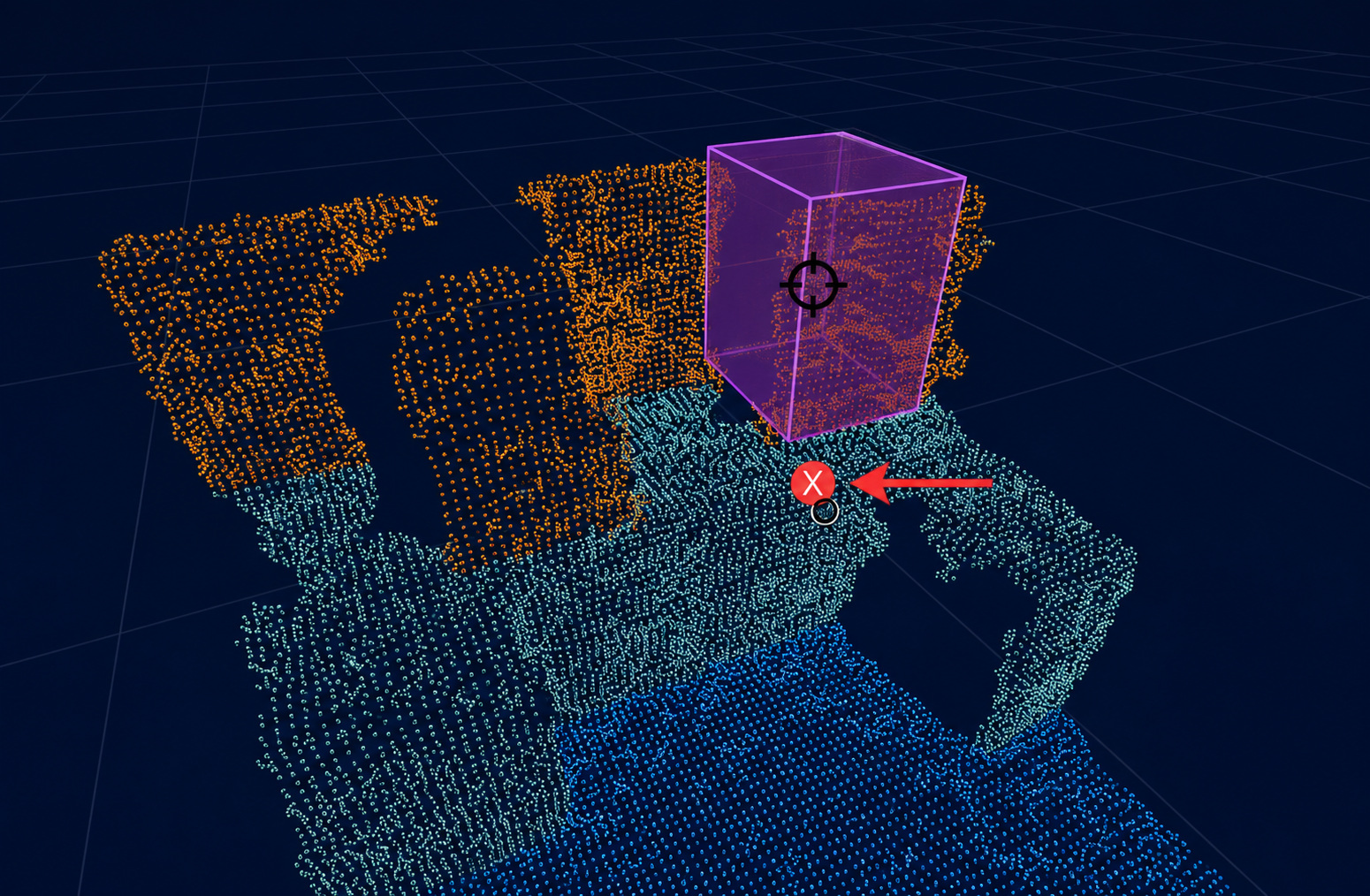
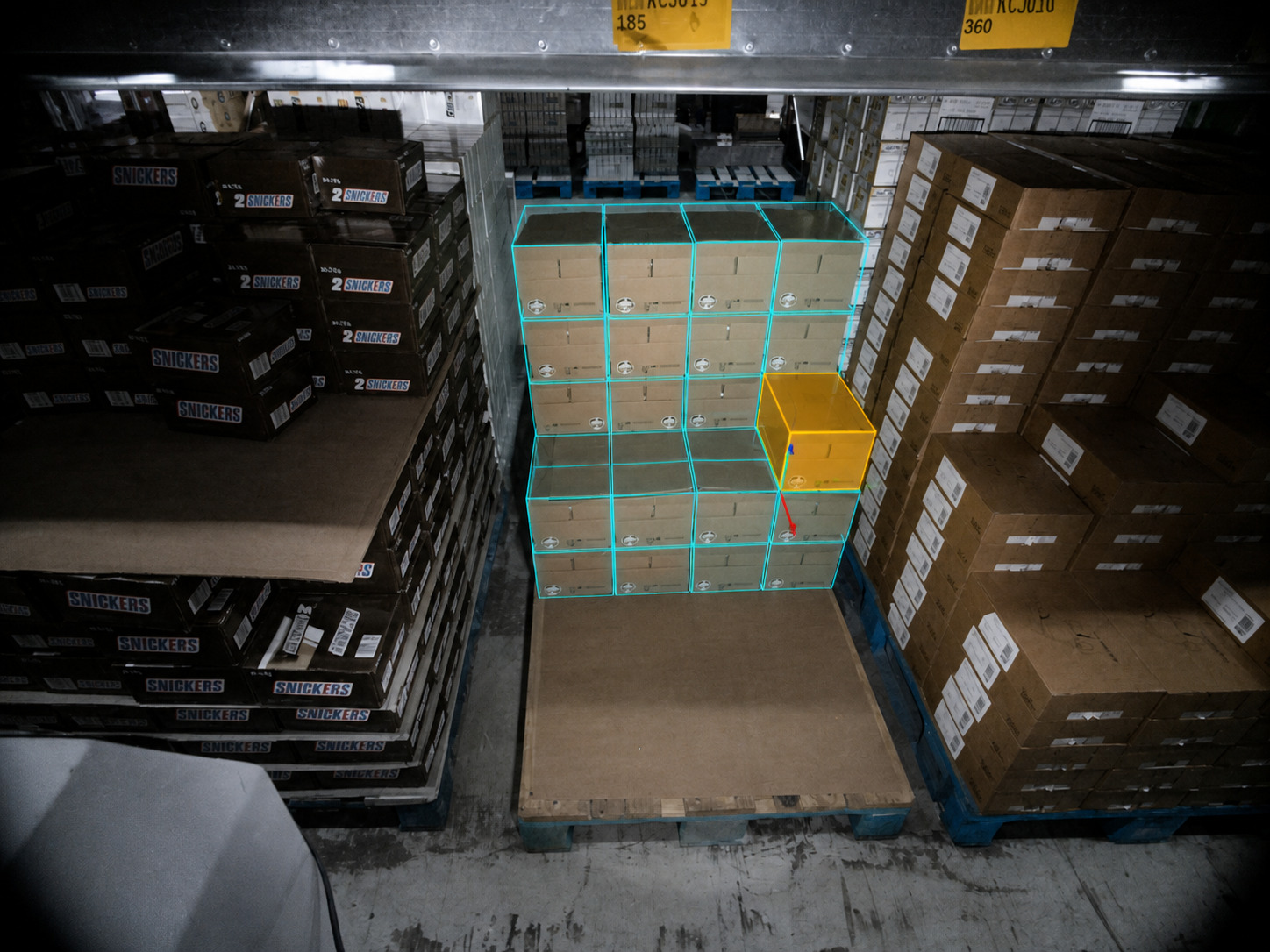
A box detector alone can select a visually convincing but buried or neighboring package. Layer reasoning supplies exposure and stack context; localization supplies the box pose required by grasp planning.
The scene is reinterpreted as the stack changes instead of relying on a pre-programmed layer count.
Layer, candidate and orientation outputs create inspectable decisions and controlled no-pick states.
Point-cloud filtering, package dimensions, plane/layer structure and candidate scoring constrain the search space before robot reachability.
Remove irrelevant points, estimate exposed depth bands and organize surfaces using expected package dimensions.
Combine visible surfaces, spatial continuity and the active-layer boundary into candidate 3D boxes.
Rank exposure and geometry, determine left/right approach orientation and return target plus confidence/failure state.
The repository contains stack scans, package-location cases and recorded failures, but no universal deployment result. Validate layer agreement, target identity, pose error, false candidates, no-pick behavior and completed grasp outcome across incomplete and neighboring stacks.
Next step
Tell us what the process must decide reliably, and we will reply with the measurement we would make first.