Software that turns visual evidence into an operational decision.
Customer-specific products built around real cameras, robots, assets and failure modes—combining learned perception with explainable geometry, observable outputs and deployment acceptance criteria.
Measure individual fish without interrupting the population.
A traceable stereo-vision chain converts underwater imagery into per-fish landmarks, 3D morphology and biomass features for lower-intervention growth monitoring.
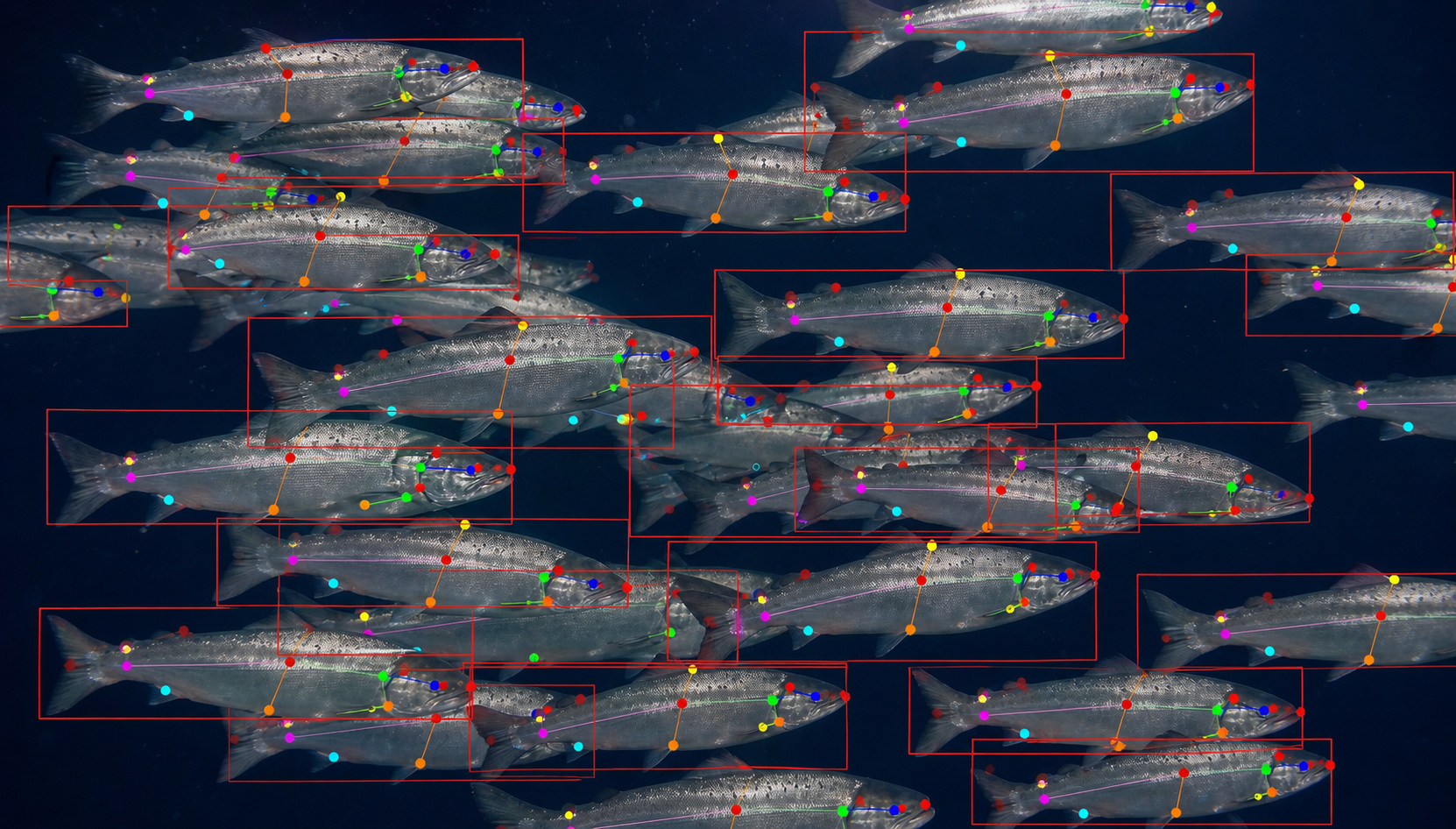
Detection and anatomical keypoints in dense schools
A custom YOLOv8 pose model associates a bounding box and repeatable anatomical landmarks with each visible salmon in both synchronized views. Confidence-gated observations provide the identity and correspondence layer required for reliable stereo reconstruction.
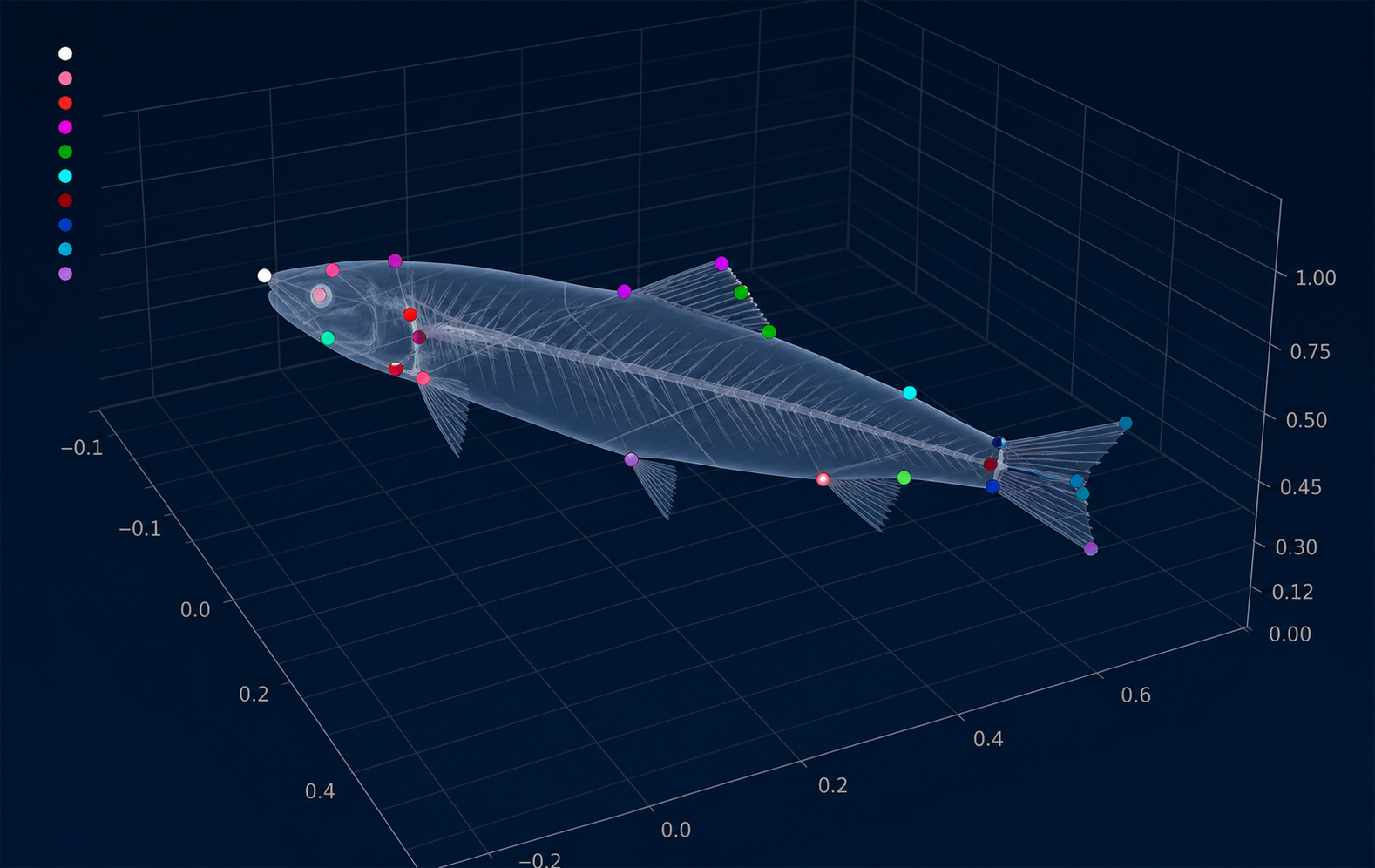
Biomass features from reconstructed anatomy
Calibrated stereo association triangulates the accepted landmarks into physical 3D form. Body-length, width and shape features feed an XGBoost regression stage, creating an inspectable route from camera evidence to non-contact biomass analytics.
Give the robot the geometry needed to pick and place.
Production pipelines connect stack context, package identity, 3D pose and post-grasp verification to downstream planning through explicit confidence and no-pick states.
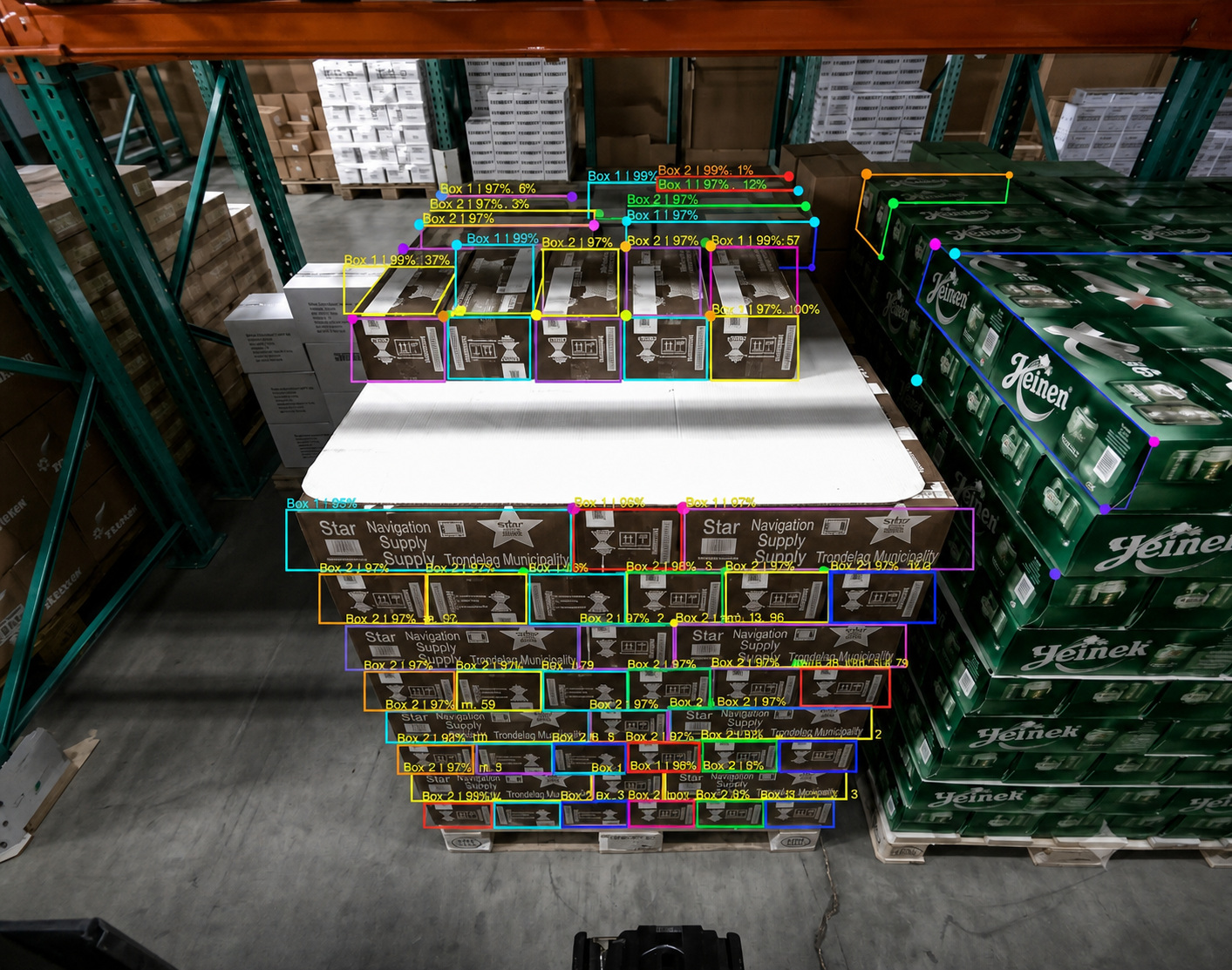
Build package candidates from registered texture
A high-resolution monochrome camera and YOLO detector locate known package surfaces and texture keypoints. Adjacency, face compatibility and registered box dimensions assemble those observations into plausible 3D candidates without requiring a depth camera at this stage.
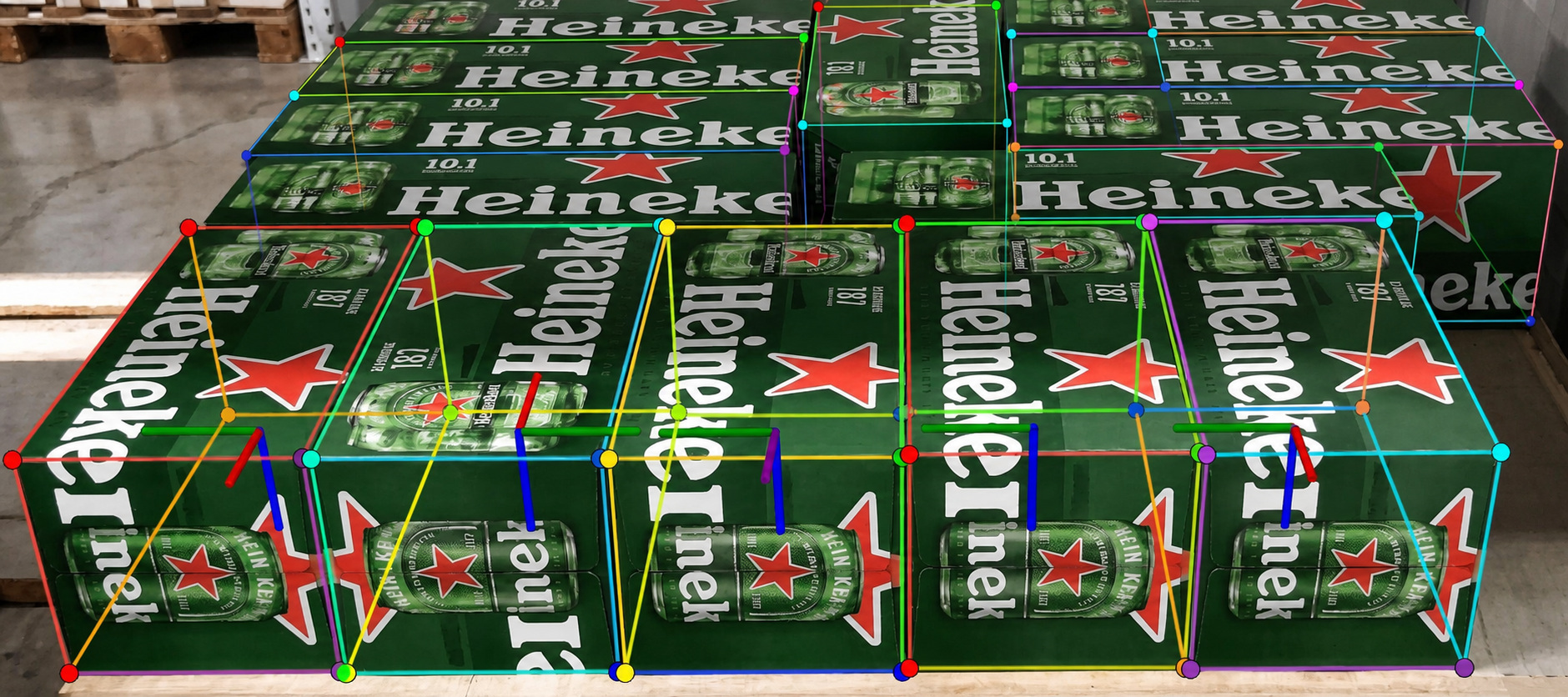
Refine detection into robot-usable box pose
Texture correspondences initialize orientation and a calibrated 2D-to-3D solve refines the package transform. Reprojected 3D edges make alignment error visible before the pose is released to grasp planning.
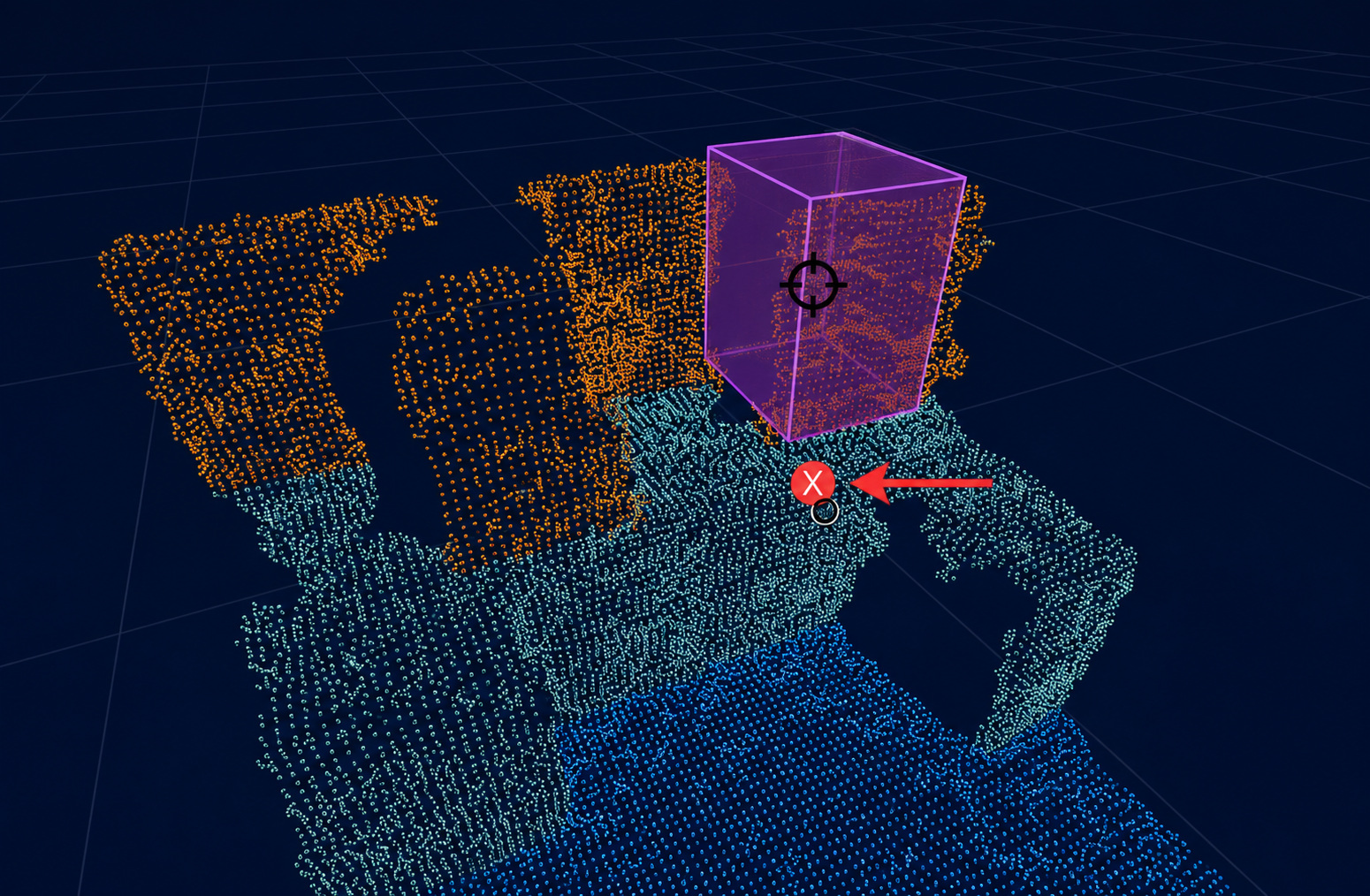
From full-stack scan to selected box
Filtered LiDAR geometry and known package dimensions infer the changing layer structure. Box-level candidates are then constrained by exposure, physical fit and approach side, reducing a complex point cloud to one grasp-ready target or a controlled no-pick result.
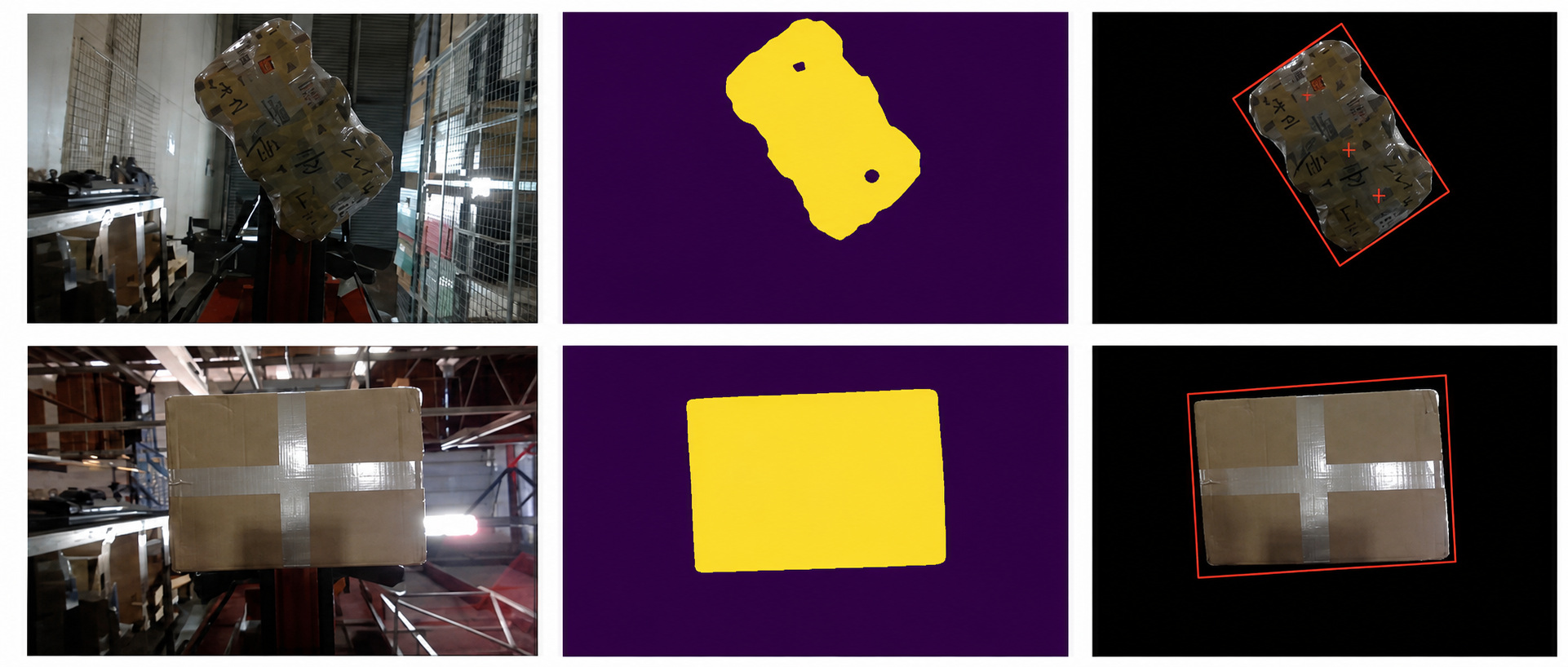
Correct package alignment before placement
Semantic or instance masks isolate the suspended load; mask moments and a minimum-area rectangle recover center and yaw. Camera calibration and robot kinematics transform that evidence into a placement correction for rigid cases and reflective bottle bundles.
Protect downstream automation from misleading geometry.
A layered point-cloud product rejects cell infrastructure, reflective scattering and isolated artifacts while preserving the package surfaces required for localization and grasp planning.
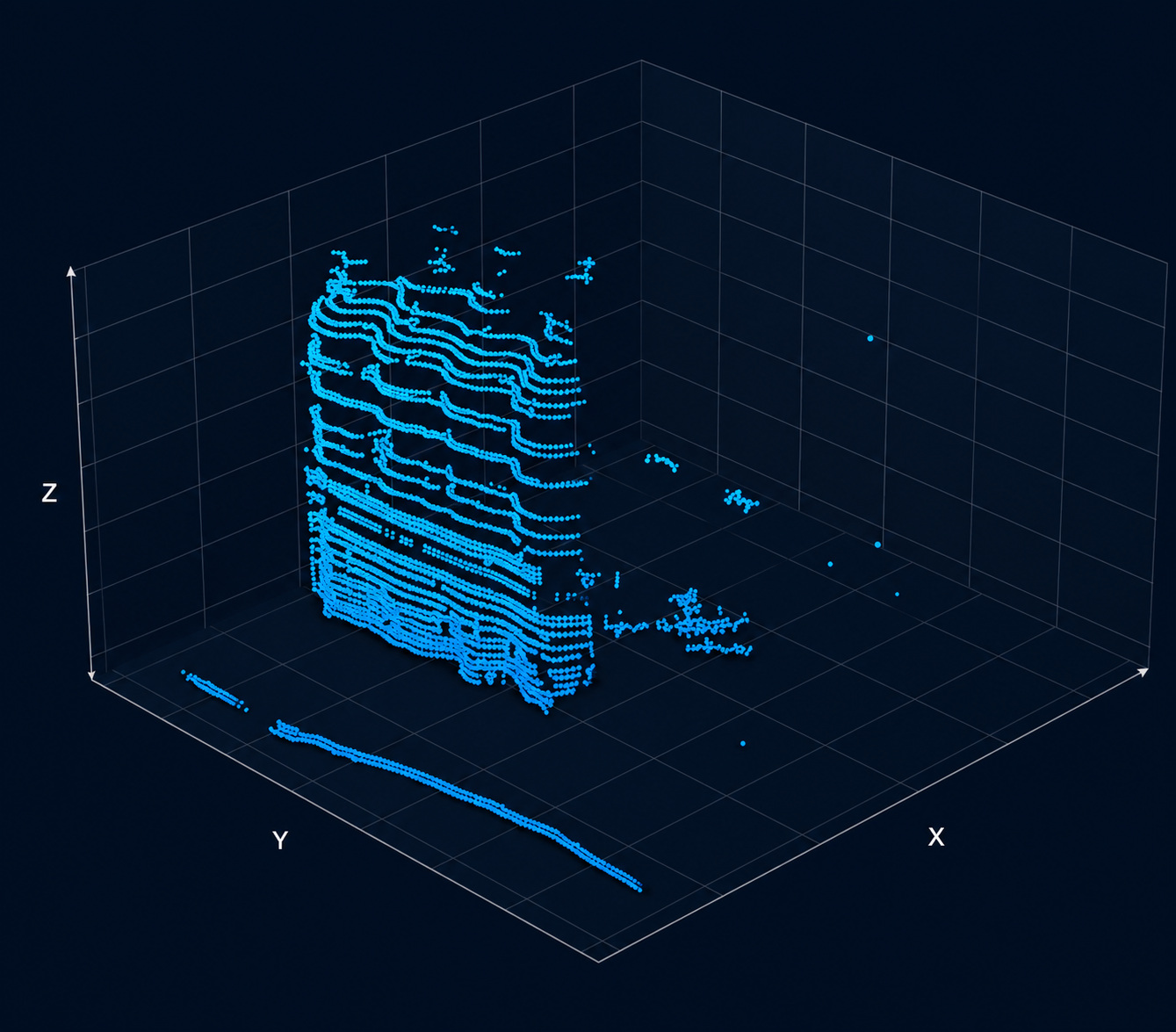
Deliver a clean package surface to perception
Spatial cropping, connected structure and surface consistency remove poles, safety barriers and scattered reflections from shiny bottles. The output preserves the front-facing package geometry that downstream models can safely fit.
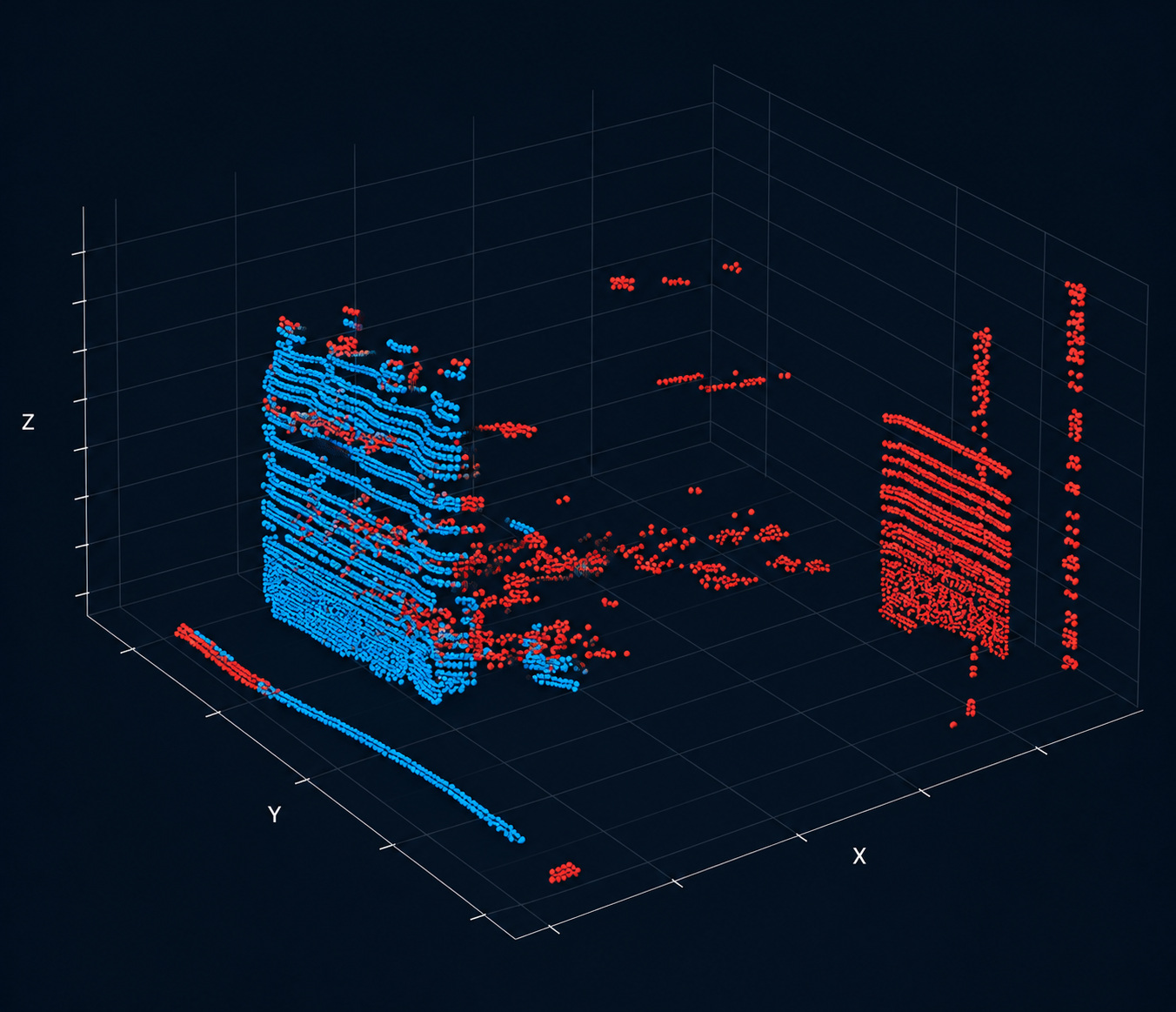
Classify signal and noise with local 3D context
Paired clean/noisy scans define point-level evidence. Position and stack-size priors combine with neighborhood distance, local normals, cluster support and density so the filter can reject noise without erasing useful package edges.
Convert inspection evidence into maintenance and motion decisions.
Interpretable vision products standardize cleanliness, localize structural defects and stop unsafe picks while retaining the evidence operators need to review each decision.
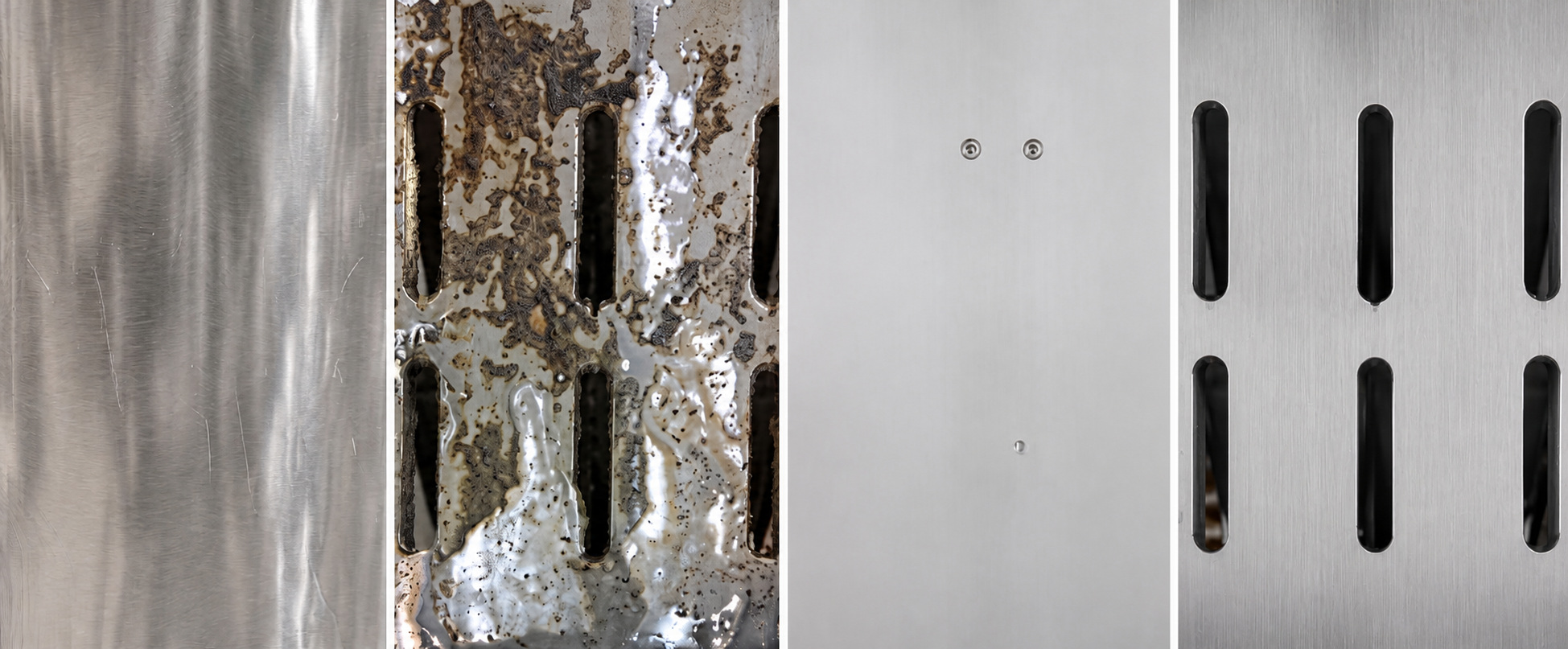
Repeatable pallet cleanliness decisions
Normalized surface views are partitioned with a quadtree so local contamination is not hidden by a global average. Texture features and Linear Discriminant Analysis compare each region with clean references, while curated front/back cases support regression testing.
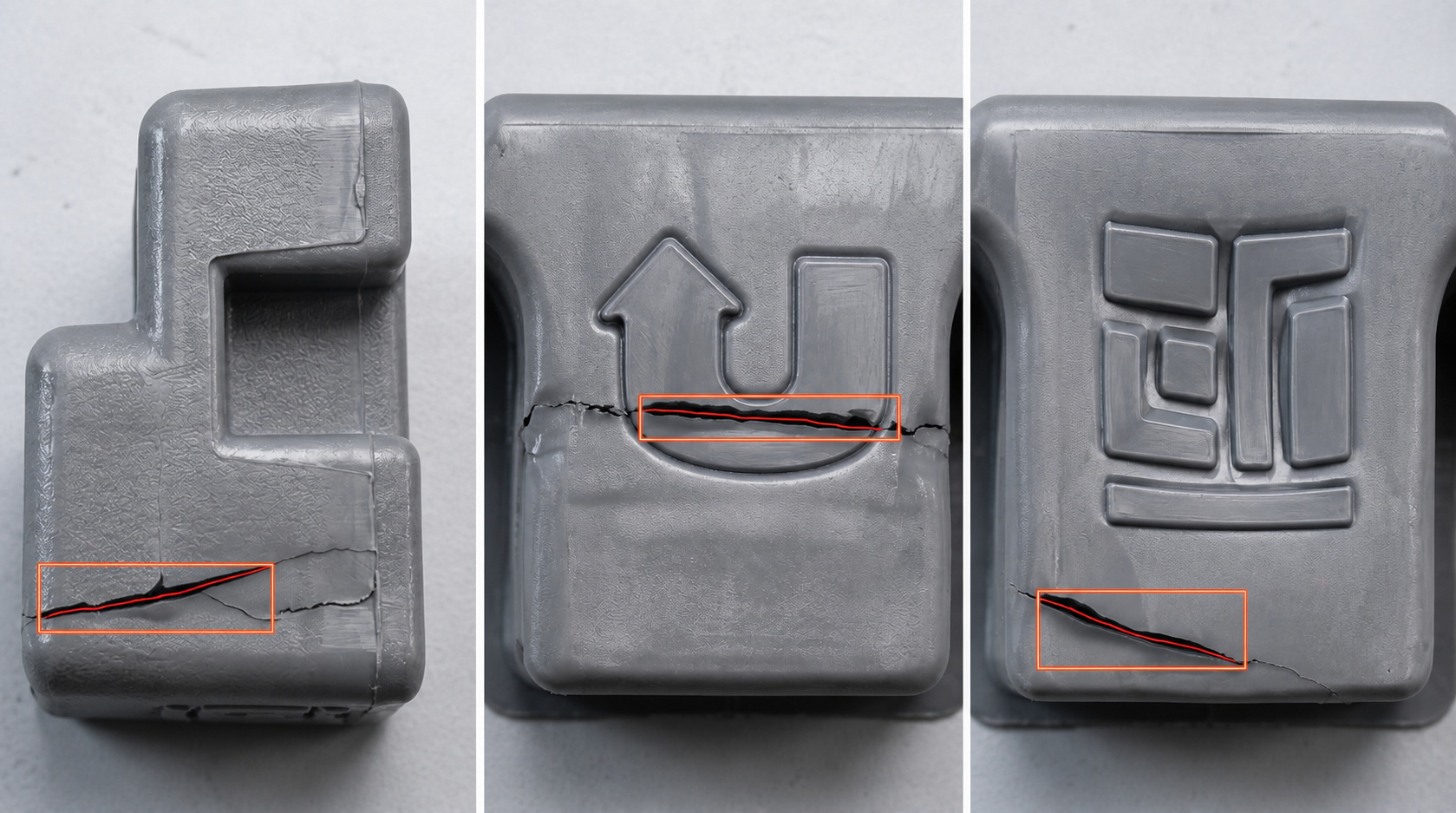
Crack evidence for maintenance triage
Mask-based detection localizes crack extent across component geometries, while ridge/Hessian analysis provides an interpretable line-structure check. Component-relative area supports severity policy without hiding the original defect evidence.
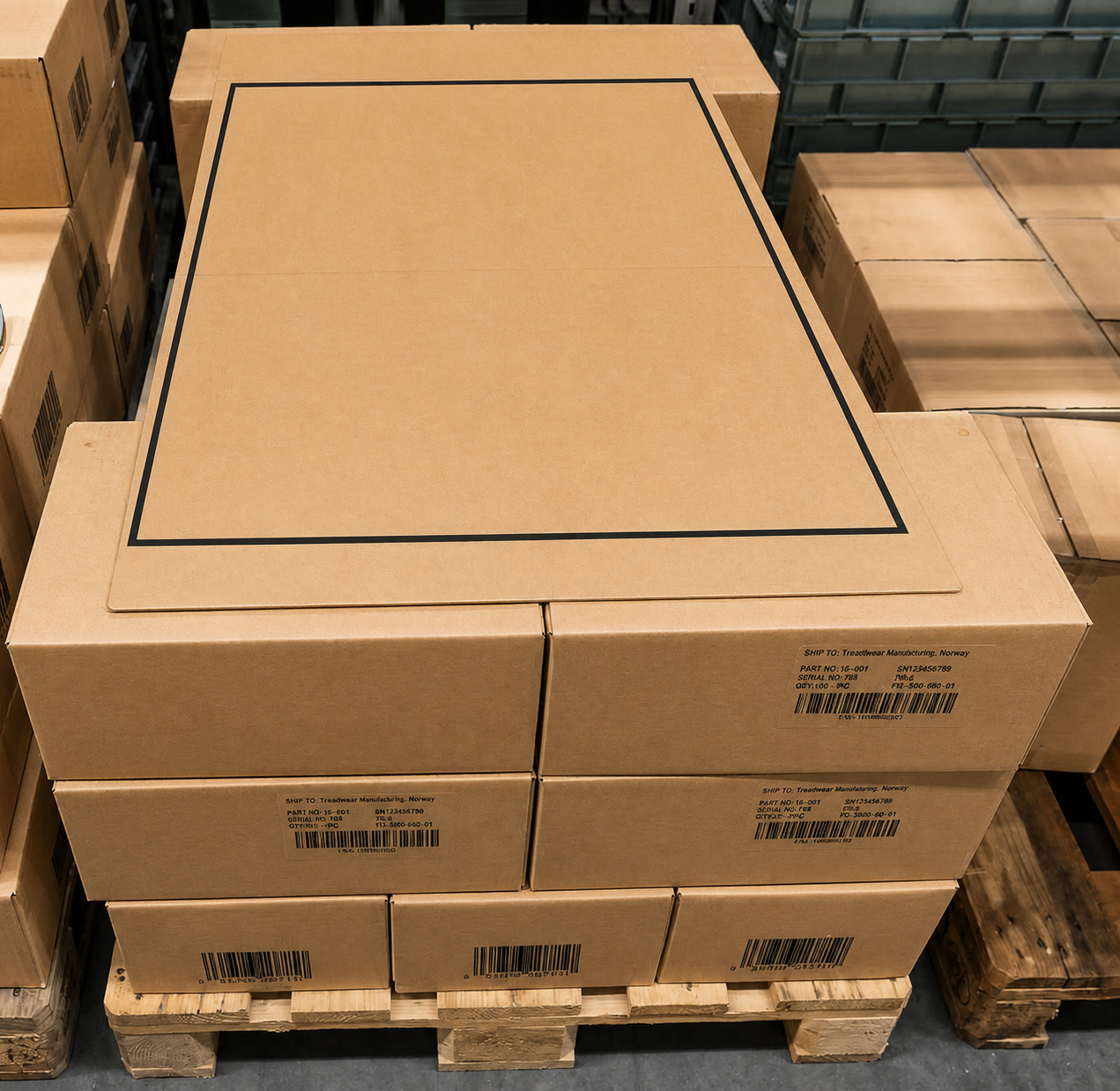
Detect a covering sheet before the gripper commits
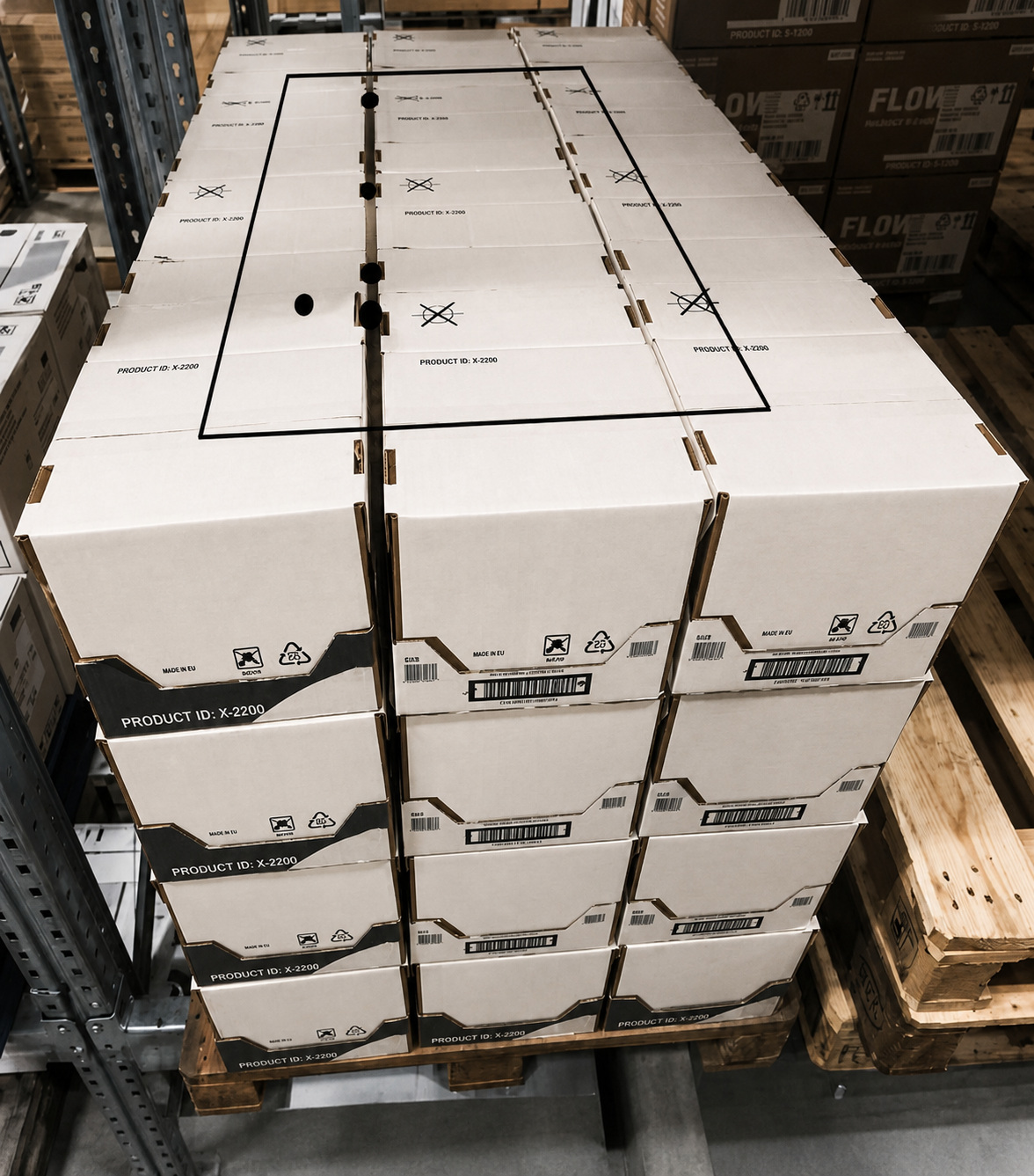
A rectified overhead view and targeted preprocessing feed PCA-based structure analysis. When expected package gaps disappear beneath stray cardboard, the system returns a reviewable hold state and requests operator removal.
Release the cycle only when structure is visible
Visible seams and package gaps provide positive evidence that the intended surface is exposed. The same two-state interface—continue or controlled hold—keeps safety logic simple for robot control and operators.
Close the gaps between sensing, identity and action.
Focused services provide calibrated measurements, stable coordinate frames, known-asset identity and consequence-aware inspection—the foundations that make a complete automation product maintainable.
One disposition workflow for real pallet damage
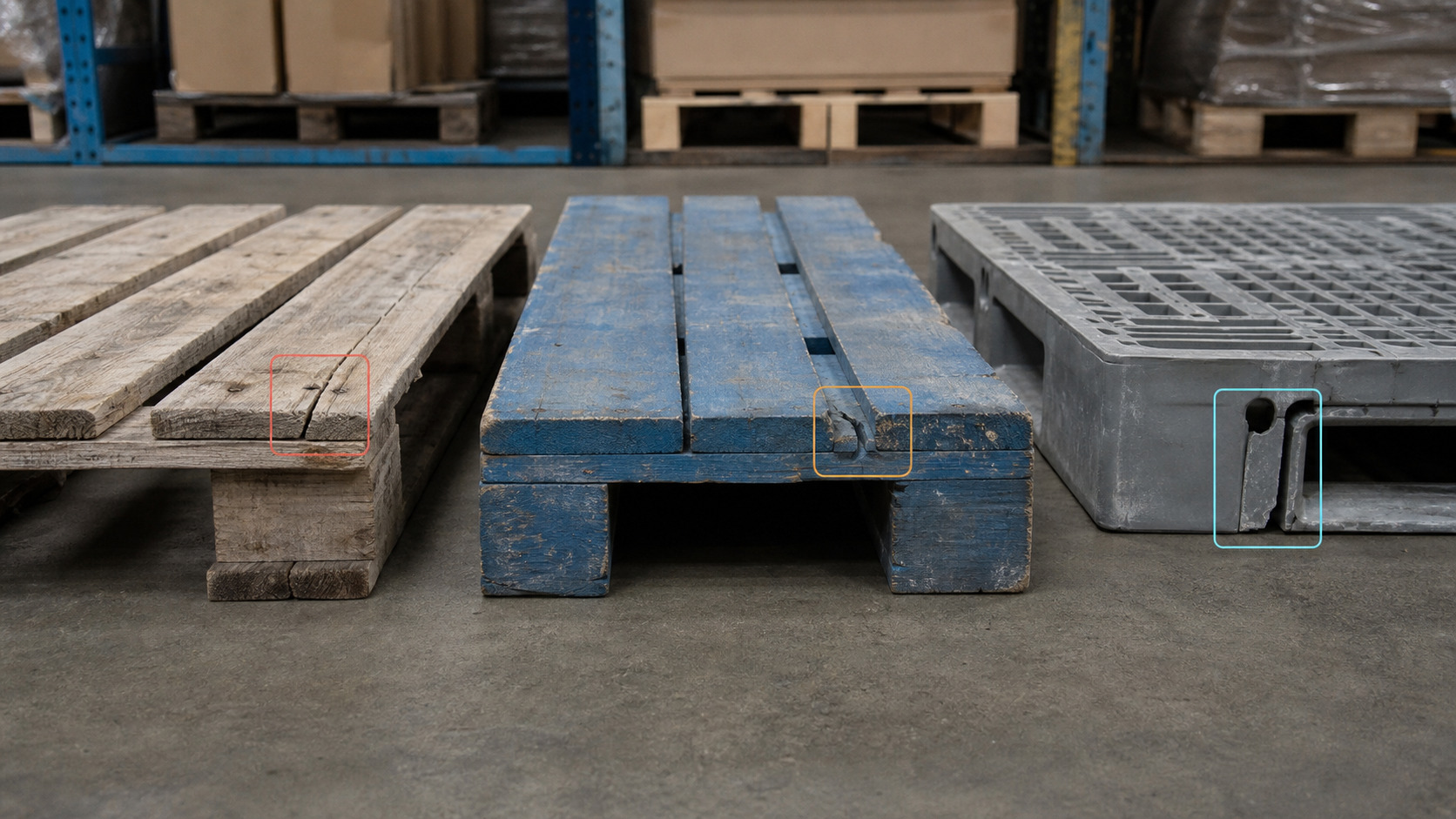
Component-aware segmentation distinguishes cracks, dents and broken fork openings across natural wood, painted pool pallets and molded plastic. The service retains pallet family, affected structure, mask and confidence for release, review or maintenance policy.
Find shallow dents that general damage models miss
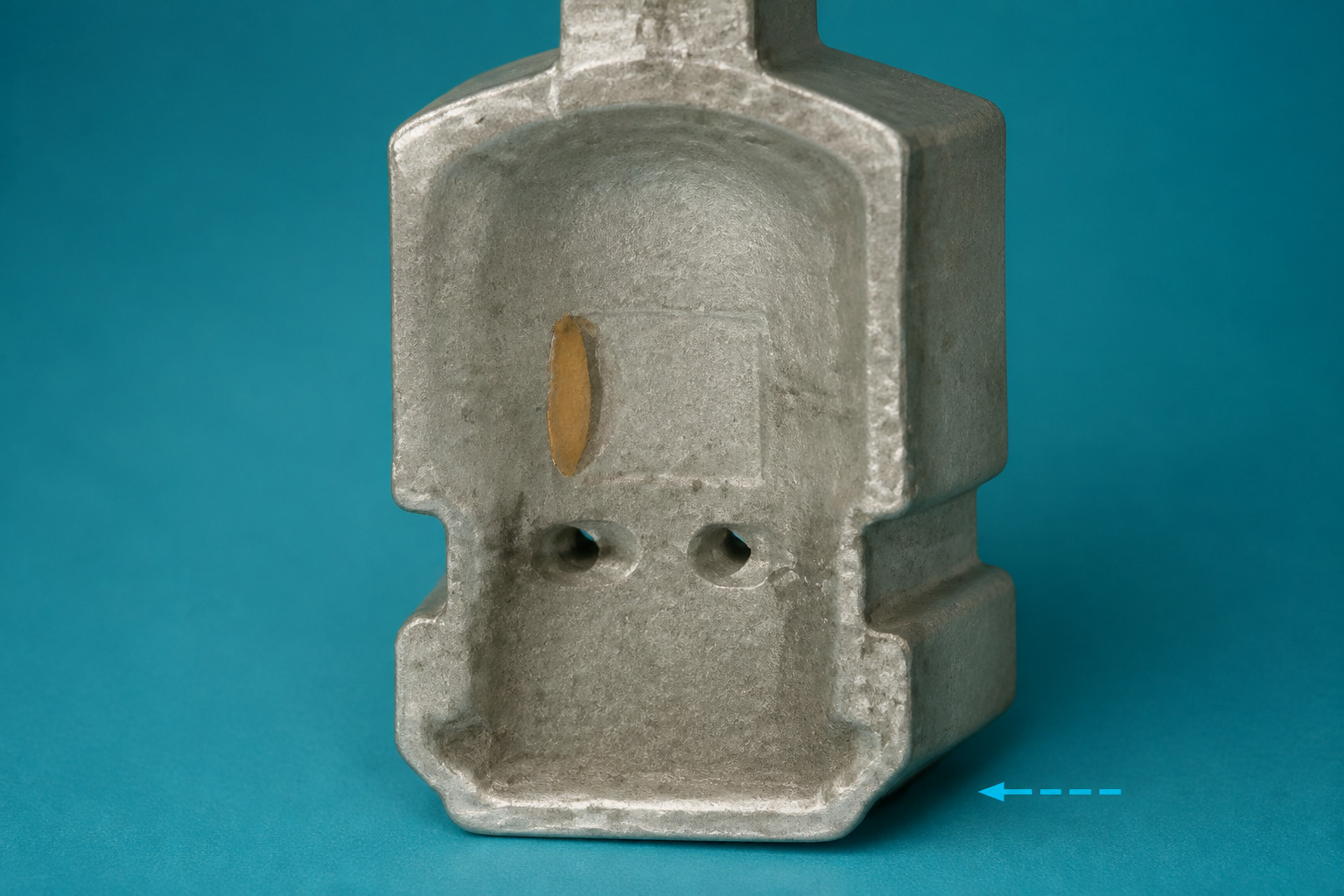
Part, surface and camera metadata constrain a dedicated mask model to the expected component. Localized deformation evidence supports a consistent review rule while reducing confusion with molded texture, scuffs, shadows and normal wear.
Localize known pallet labels despite wear
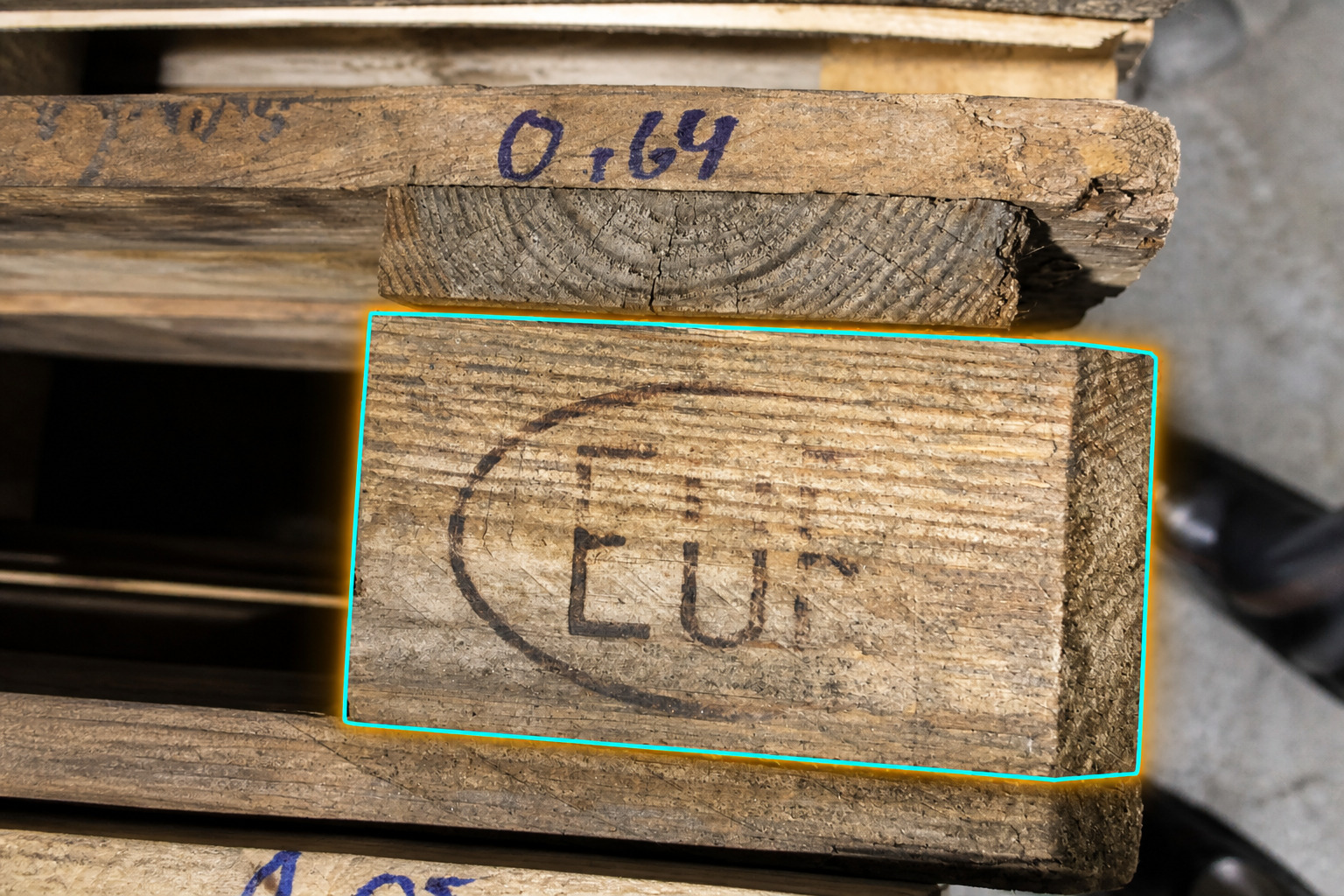
Mask-based detection isolates EPAL/EUR/UIC-style and related known identity regions across front, back and side views. The crop, class and confidence become explainable evidence for pallet-type aggregation or manual review.
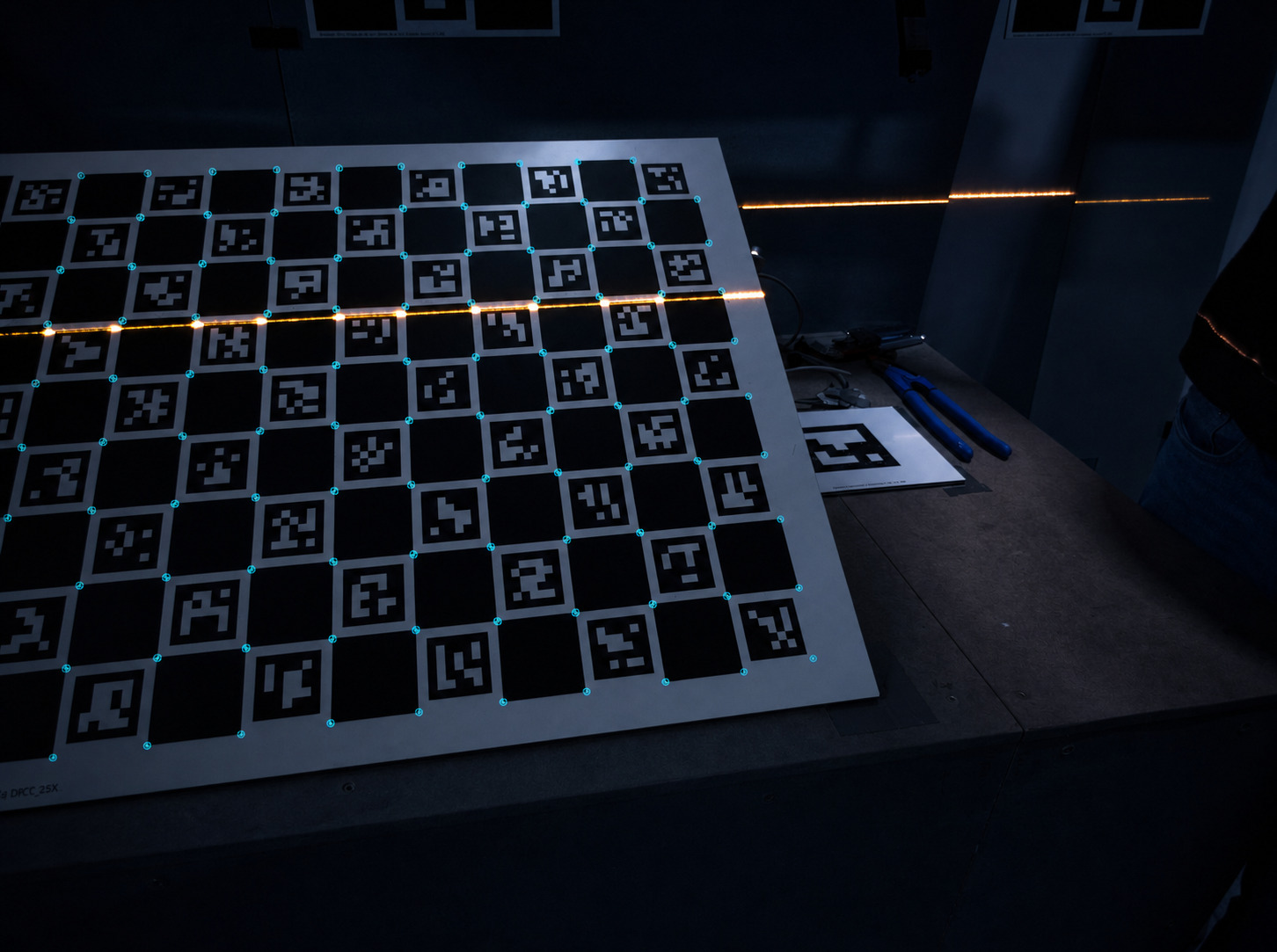
From faint reflection to metric 3D evidence
Contrast enhancement and spatial scoring recover fragmented laser candidates; sub-pixel localization refines the centerline. Multi-pose board calibration estimates the camera–laser relationship so accepted pixels become traceable 3D coordinates.
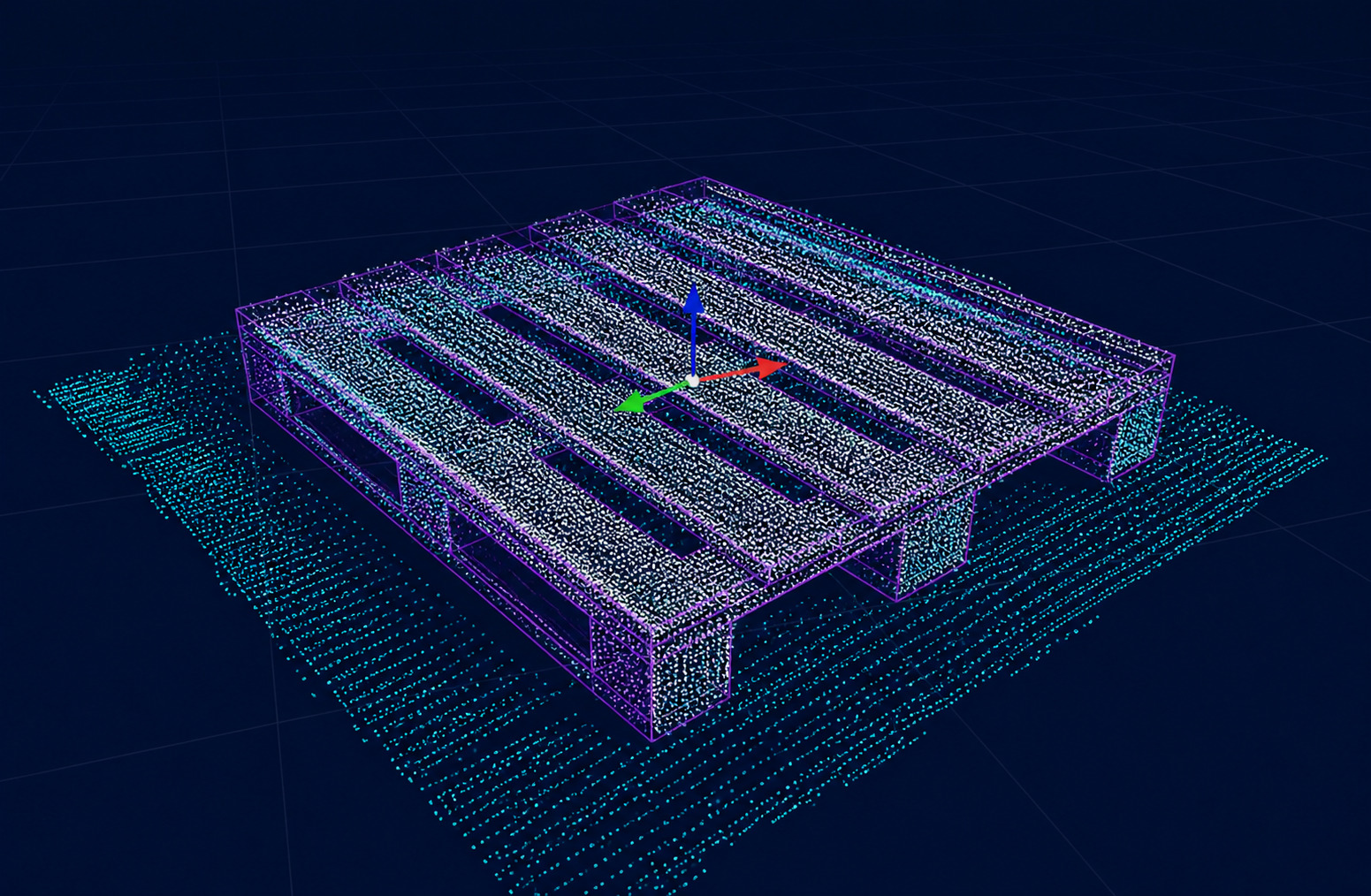
A stable pallet frame without perfect placement
A centered observed point cloud is aligned with the reference pallet model by minimizing nearest-neighbor geometric disagreement. The resulting rigid transform gives inspection and robot planning a shared position-and-orientation frame.
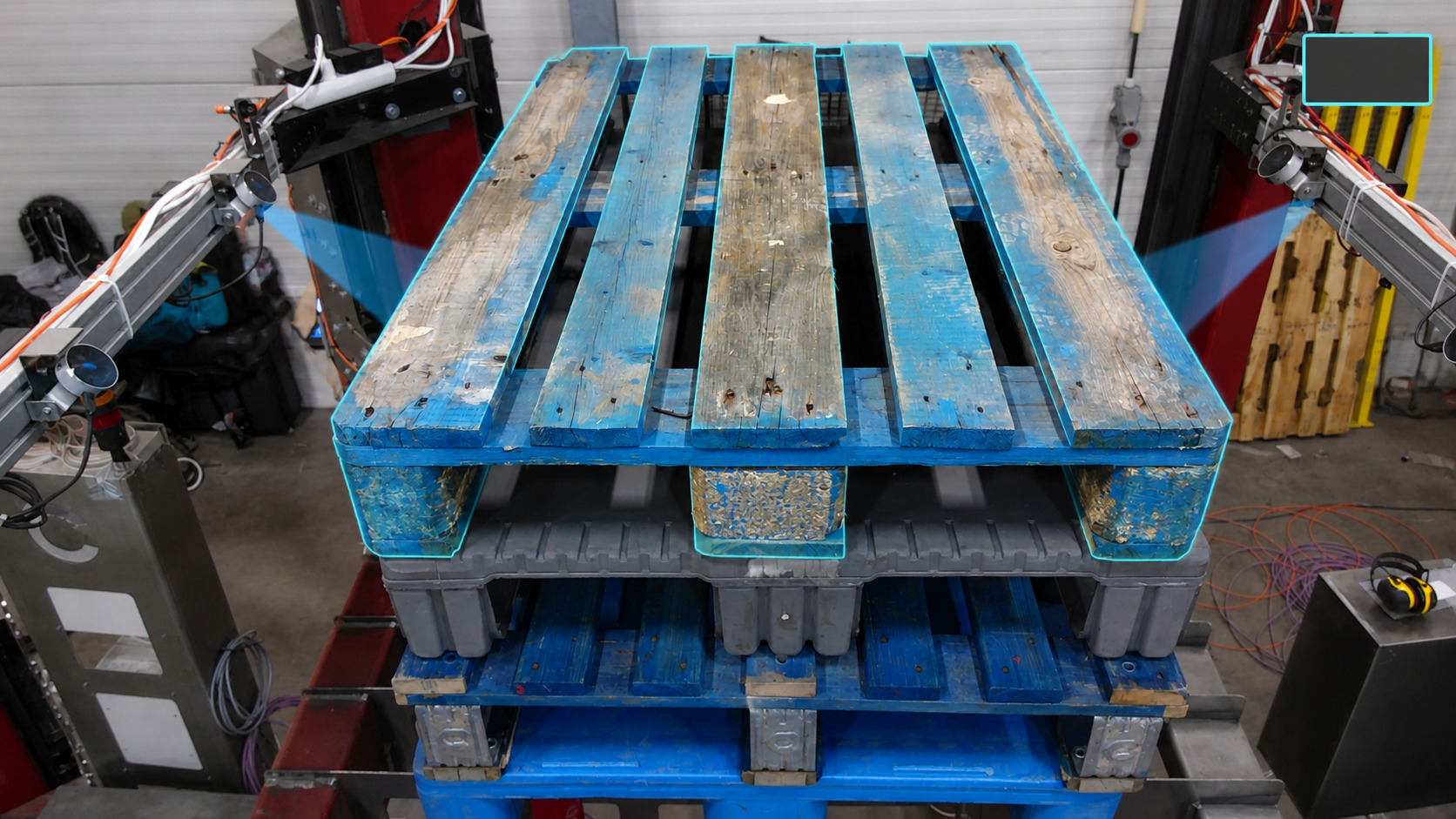
Resolve pallet family from known identity evidence
Color-normalized camera views feed known-label detection; consistent results are aggregated into configured pallet families. Conflicting, absent or unreadable evidence fails closed, giving automation a traceable type decision rather than a whole-image guess.
Measure and align the visual performance of display systems
Calibrated camera workflows turn complete display images and adjacent projection channels into objective evidence for quality assessment, automatic matching and reliable commissioning.
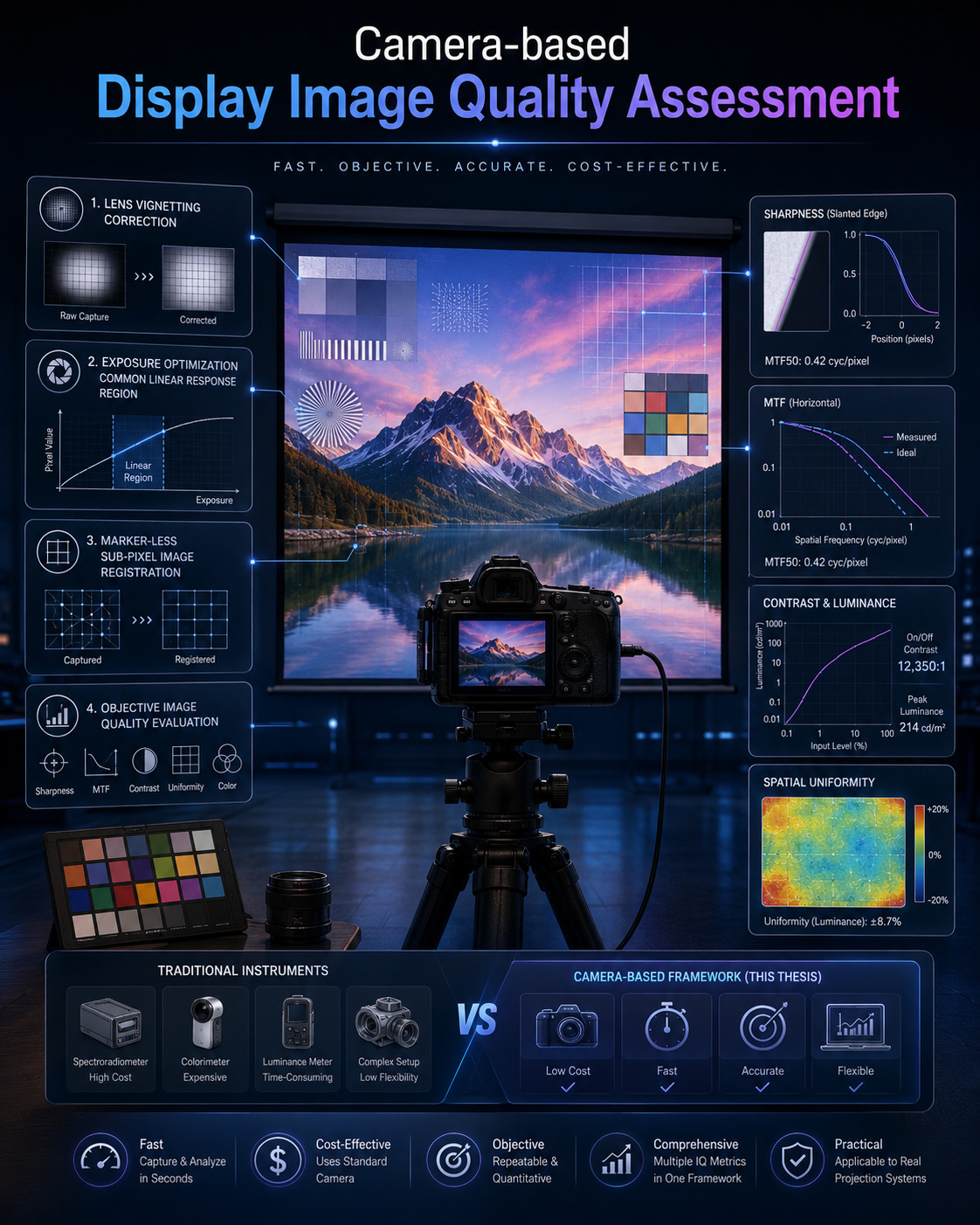
From camera capture to objective display quality
A characterized still camera records the complete display in one shot. Vignetting, distortion and dust corrections protect the measurement; marker-less sub-pixel registration then connects the capture to full-reference metrics and perceptually validated quality evidence.
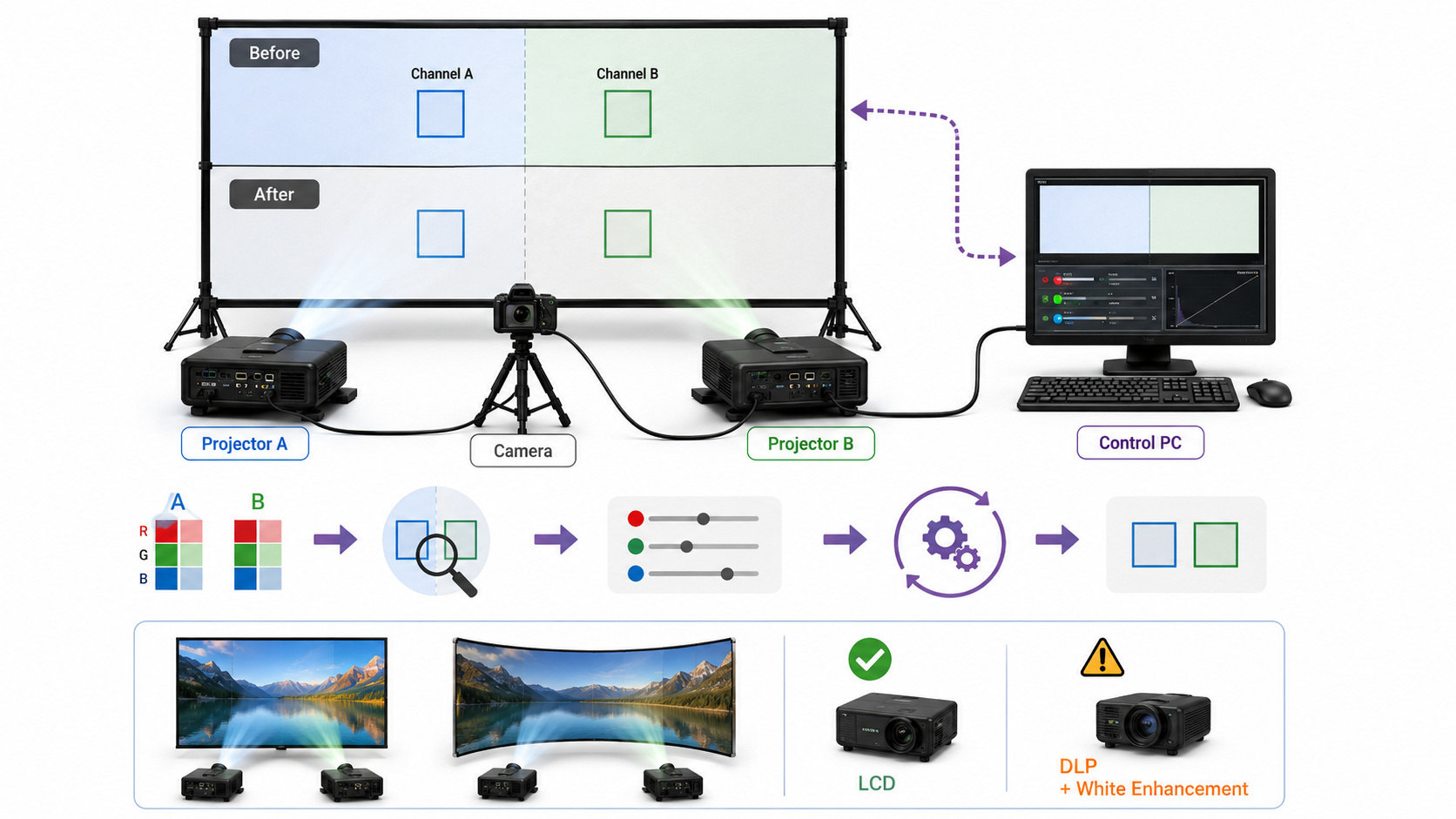
Make adjacent projection channels appear as one
A camera samples representative RGB regions from two channels while a closed-loop controller adjusts gains and re-measures the result. The supported LCD workflow converges below the just-noticeable color difference in under one minute.
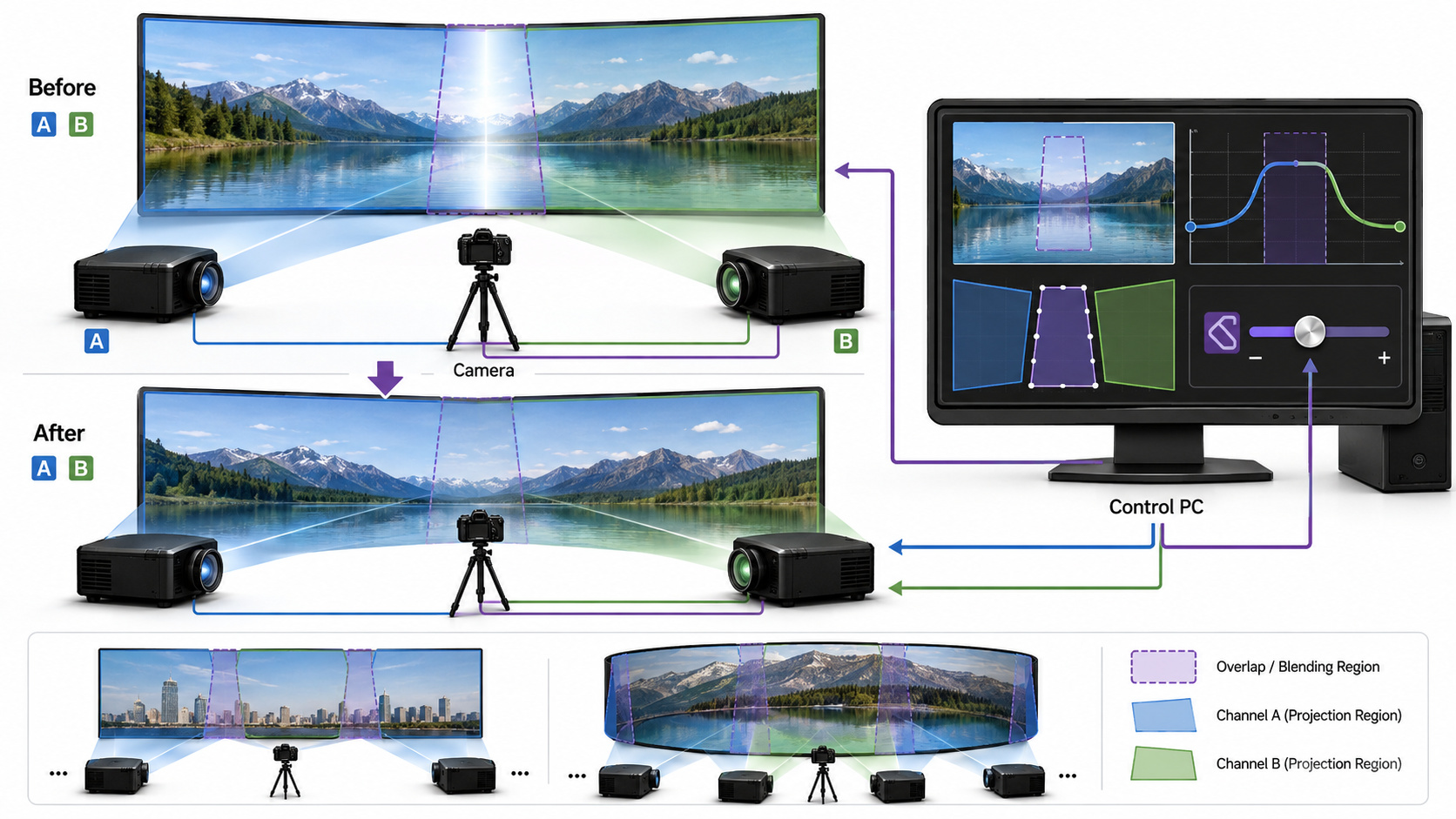
Turn bright overlap into a visually continuous image
Camera measurements expose the overlap profile while alpha polygons separate shared and single-channel regions. A unified projector-response, alpha and gamma function reduces tuning to one manageable parameter.
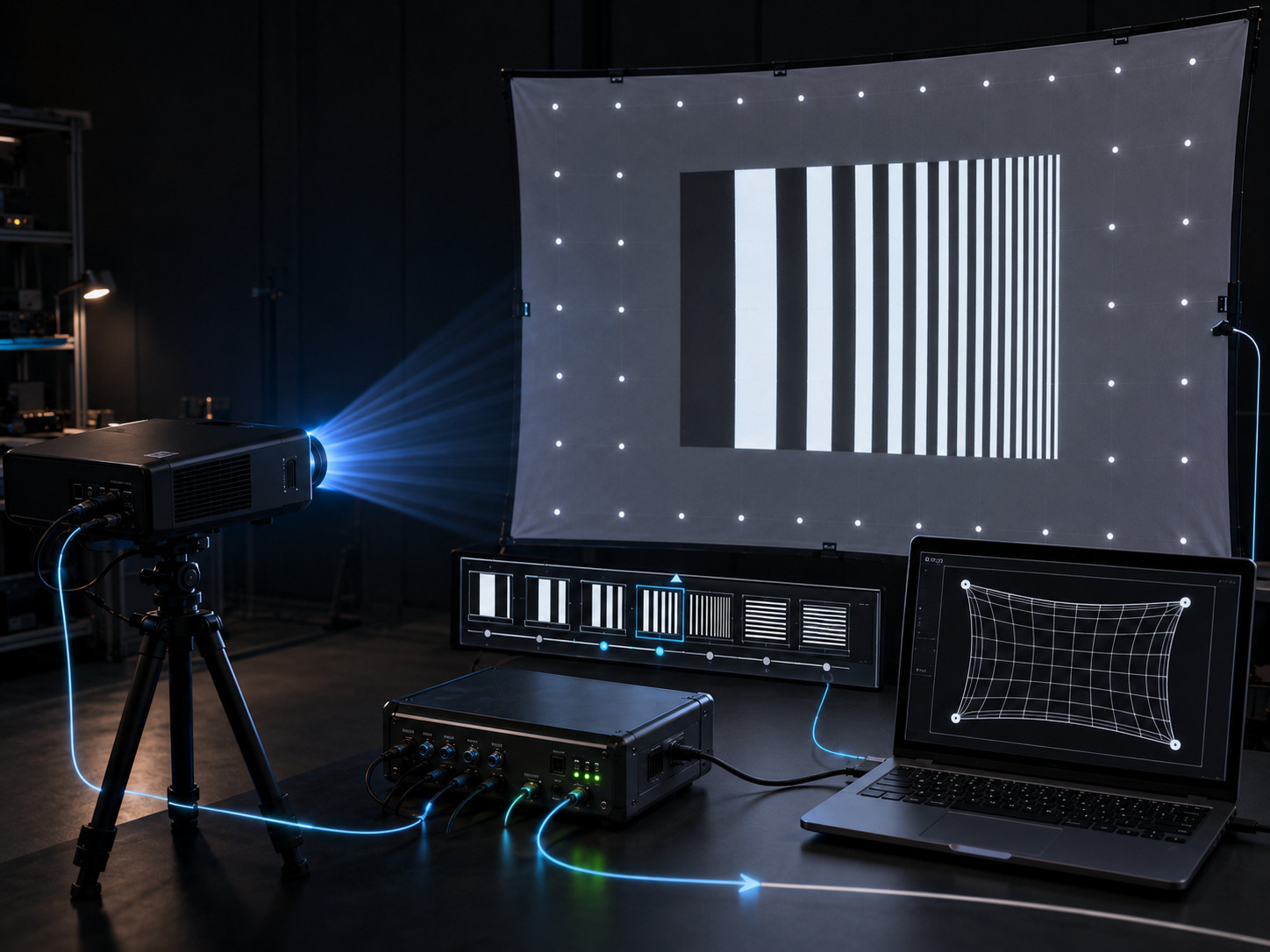
Let the screen measure and correct its projected geometry
Coded patterns illuminate discrete control-point sensors across the target surface. Their response histories recover projector coordinates, build a deformation grid and drive automatic image warping in approximately ten seconds per projector.
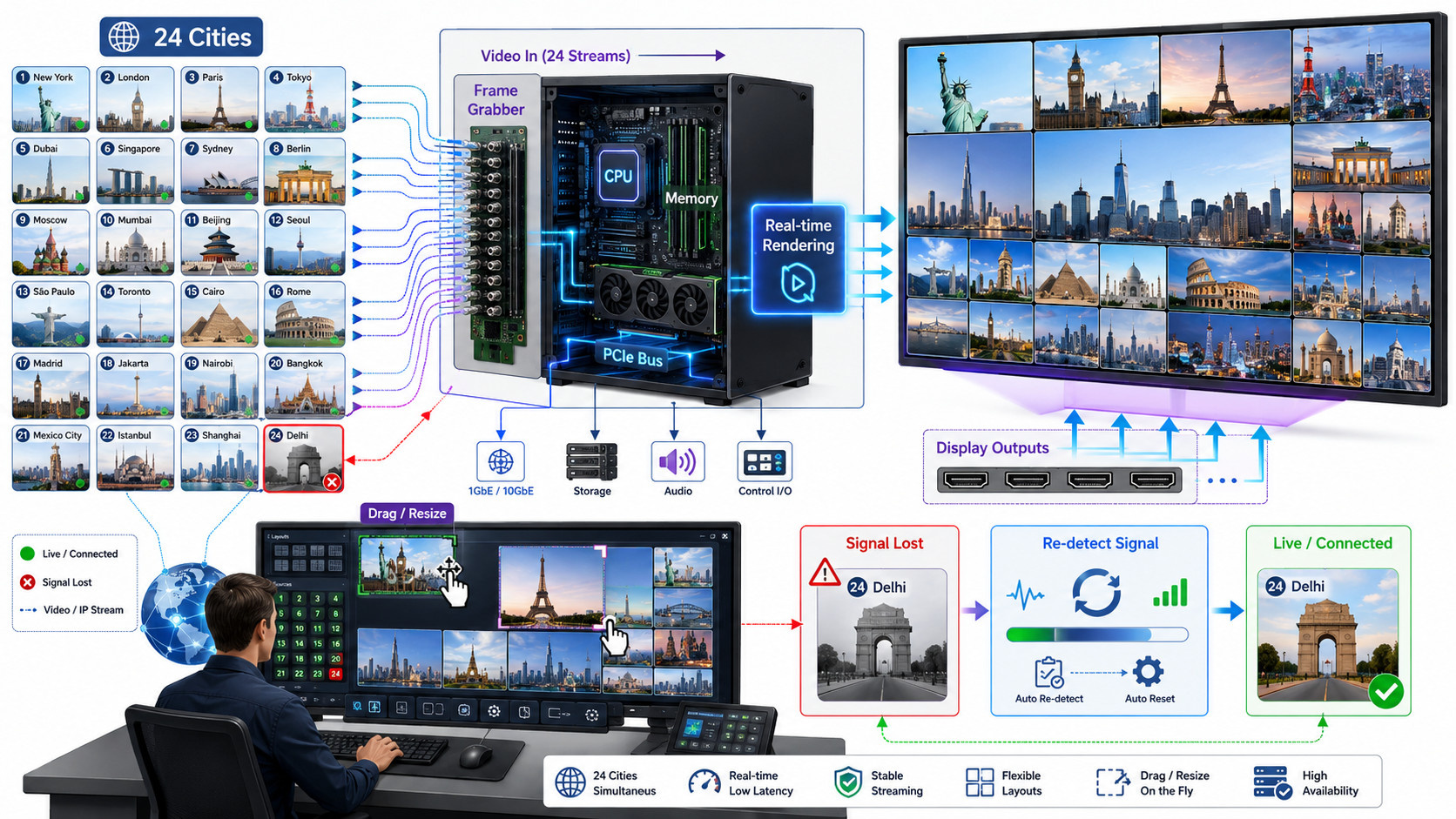
Move live video from capture hardware to an operational display
Real-time acquisition, direct data transfer, flexible layouts and automatic signal recovery turn many concurrent feeds into a stable multimedia product.