
Direct attention to consequential damage
Review localized evidence instead of searching entire pallets or treating normal wear as failure.
WAREHOUSE ASSET QUALITY | MULTI-DEFECT VISION
Product goal: localize cracks, dents and broken structural openings on worn wooden, pooled and molded-plastic pallets, then preserve enough visual context for a defensible release, review or maintenance decision.
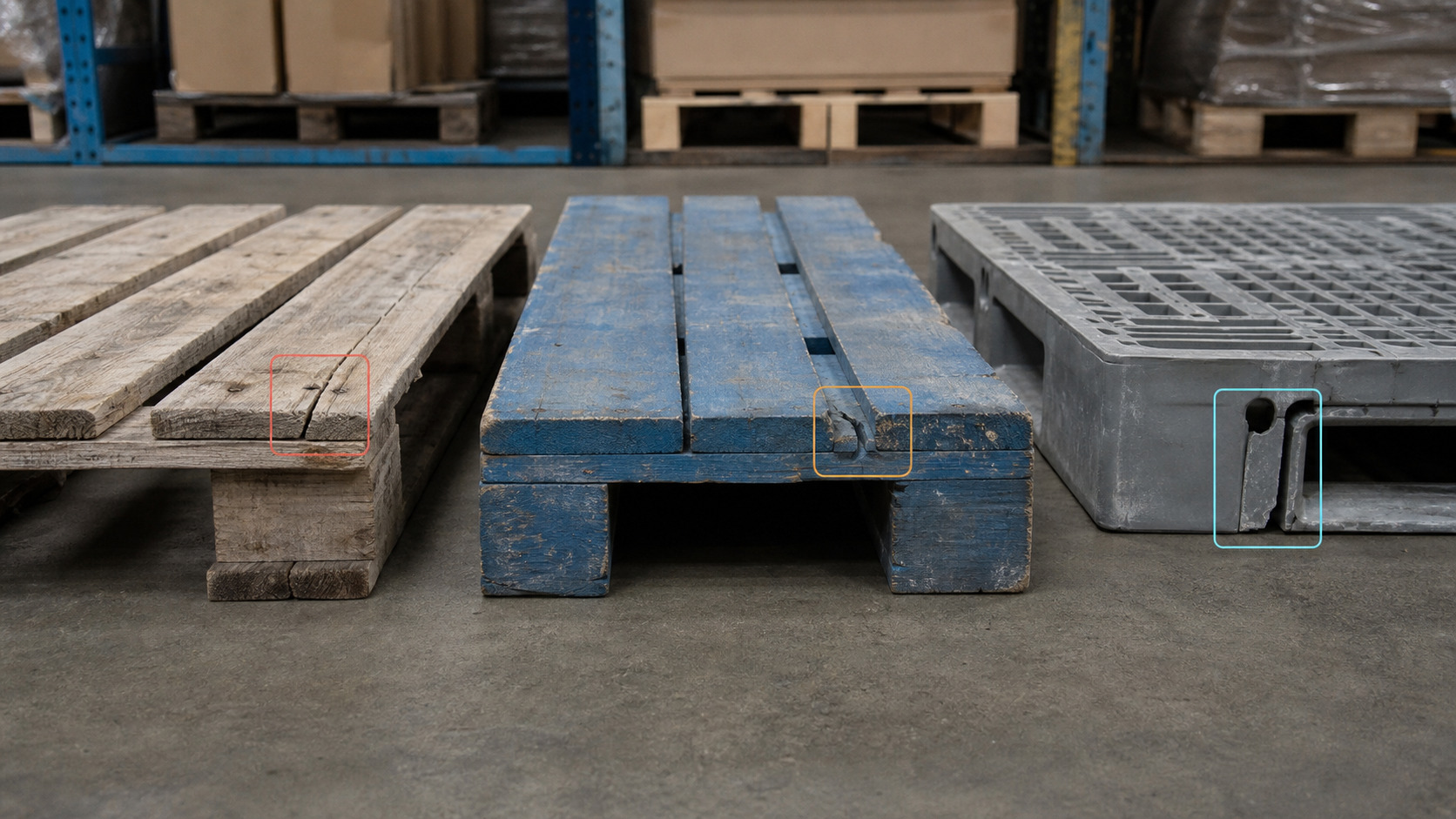
A crack on a deck board, deformation at a block and damage around a fork opening have different consequences. The workflow retains pallet type, component, surface and camera view so the decision is not reduced to a generic “damage” score.
Review localized evidence instead of searching entire pallets or treating normal wear as failure.
Thresholds and routing can differ by pallet family, component, defect type and business consequence.
Component-aware crops, augmentation and mask-based detectors support dedicated dent/crack models plus a multi-defect inspection service.
Camera naming and component metadata constrain the region expected to contain the relevant structure.
Learned masks distinguish damage from holes, texture, paint loss, shadows and normal production marks.
Return defect type, region, model confidence and evidence for automated or human disposition.
The repository includes annotated dent, crack, hole and damage examples plus model-training work, but not a fleet-wide audited result. Acceptance must include clean controls, ordinary wear, lighting change, rare severe defects and agreement with the customer's maintenance policy.
Next step
Tell us what the process must decide reliably, and we will reply with the measurement we would make first.