
Route the asset to the correct workflow
Recognized pallet families can select compatible inspection, handling and return-pool logic while uncertain cases are held safely.
ASSET IDENTITY | LABEL-DRIVEN ROUTING
Product goal: detect known pallet labels and stamped identity regions across available camera views, aggregate that evidence into an operational pallet type, and return an explicit unreadable or obstructed state when identity is not trustworthy.
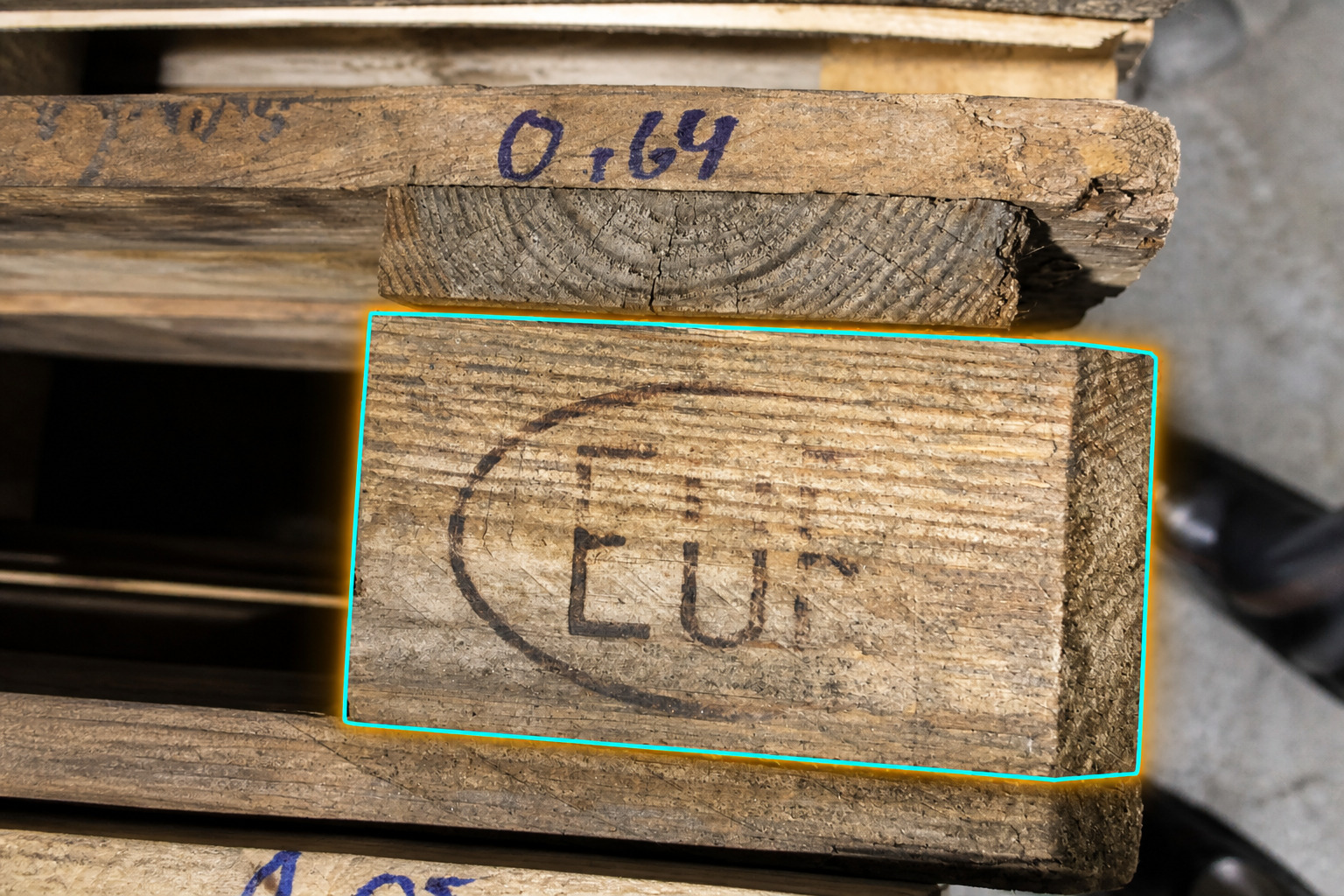
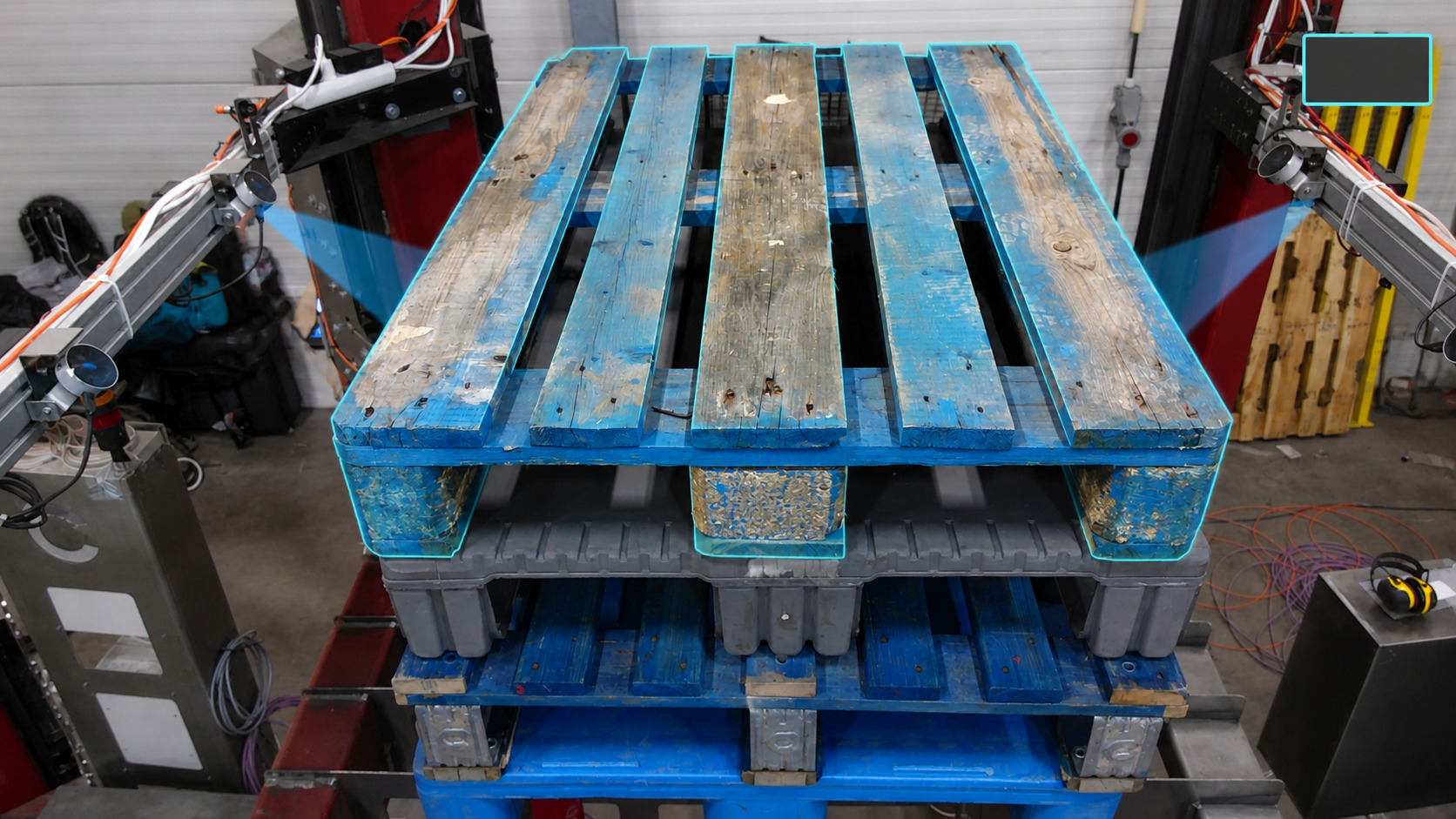
Color, wear and pallet geometry can vary within a family and overlap between families. Known EPAL/EUR/UIC-style markings and related label classes provide a more explainable anchor; multiple views reduce dependence on one damaged or hidden label.
Recognized pallet families can select compatible inspection, handling and return-pool logic while uncertain cases are held safely.
The service returns detected labels and aggregated type so business rules can evolve without retraining the detector for every routing change.
Region detection, label classification, view-level filtering and deterministic evidence rules create a traceable result rather than a black-box whole-image guess.
Quantile-based per-channel normalization reduces avoidable brightness and color variation while preserving label contrast.
Mask-based label models localize identity regions and assign a known label class, retaining region and score for review.
Combine consistent detections across views, map them to configured pallet families and fail closed when evidence conflicts or remains unreadable.
The source contains label annotations, trained model artifacts, categorized pallet cases and expected type results; it does not establish a universal site-independent figure. Production acceptance should measure label-region recall, label-class confusion, multi-view type agreement, unreadable-label handling and final routing correctness.
Next step
Tell us what the process must decide reliably, and we will reply with the measurement we would make first.